 Live
 Give




 Store
Internship offer: Onboard scientific instrumentation
Collecting and leveraging environmental data aboard the 7e Continent vessel
- Period: 6-month internship, preferred start date: early February 2027 (expected end: July 2027)
- Contract type: End-of-studies internship, based in Marseille or Concarneau, with partial remote work possible and time on board during sea trials (vessel on expedition in the Mediterranean)
Context
Plastic Odyssey’s mission is to study, restore and protect the marine sites and protected areas most threatened by plastic pollution.
Before any clean-up or restoration mission, Plastic Odyssey seeks to characterize the ecological status of a site: its level of pollution, but also the state of its biodiversity and sensitive habitats. This is the purpose of reconnaissance missions, which assess both the feasibility of a clean-up and the health of the ecosystems.
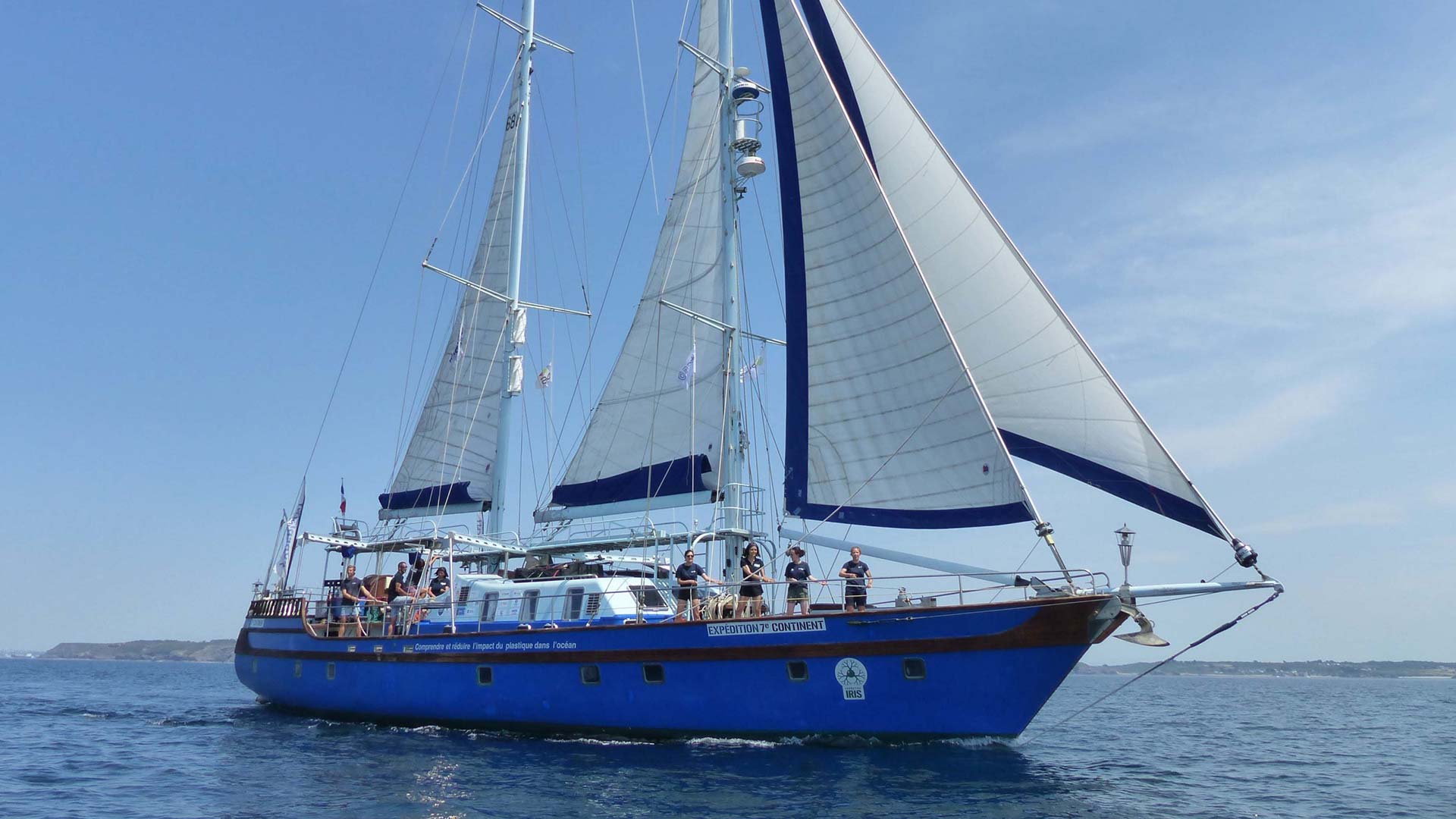
To carry out these missions, the schooner 7e Continent (27 m, 11 crew members, an onboard science lab), which has been studying plastic pollution for nearly 20 years, is joining the Plastic Odyssey fleet. The vessel is undergoing a refit from November 2026 to March 2027, ahead of the 2027 Mediterranean Tour (April – September), followed by reconnaissance missions in West Africa (Banc d’Arguin, Bijagós) and a crossing to the Caribbean and the Pacific.
This internship comes at a key moment: defining, installing and testing the vessel’s complete scientific data collection chain (bioacoustics, environmental DNA, bathymetry, seagrass monitoring with underwater drones…), building the associated partnerships and protocols, and feeding the digital twin of the sites studied. The lessons learned will directly inform the design of the equipment for the future expedition vessel Plastic Odyssey 2.
Internship objectives
- Define the technical data collection equipment to be installed aboard the 7e Continent: bioacoustics, environmental DNA, bathymetry, underwater drones to assess the condition of seagrass meadows, etc.
- Develop technical and scientific partnerships to define and validate data collection protocols.
- Compile, process and analyze the data collected, integrate it into the digital twin and continuously improve the protocols.
- Make recommendations for the future scientific equipment of the PO2 vessel.
Main responsibilities
1. Defining and integrating data collection equipment aboard the 7e Continent
- Identify the data needs of reconnaissance missions (plastic pollution, biodiversity, habitats) and translate them into parameters to be measured;
- Benchmark technical solutions: bioacoustics (hydrophones, autonomous recorders), environmental DNA (filtration, preservation, portable sequencing such as MinION), bathymetry (echo sounders, seabed mapping), underwater drones / ROVs to assess the condition of seagrass meadows, plankton imaging (PlanktoScope), aerial drones, physico-chemical sensors;
- Draft technical specifications that take onboard constraints into account: power, lab space, storage, stability, robustness in the marine environment, budget;
- Monitor equipment installation, working with the crew and suppliers;
- Prepare and take part in sea trials of the equipment during the Mediterranean Tour.
2. Technical and scientific partnerships
- Identify and reach out to relevant partners: research laboratories and institutes, marine stations, marine protected area managers, equipment manufacturers;
- Co-design standardized data collection protocols with these partners, compatible with existing reference methods and comparable from one site to another;
- Help formalize partnerships (agreements, data-sharing agreements, equipment loans);
- Prepare training for the crew and scientific teams on implementing the protocols.
3. Data compilation, processing and analysis
- Set up the data collection and compilation chain: formats, metadata, quality control, data archiving and onboard backup;
- Process and analyze the first data from sea trials and the first port calls;
- Integrate the data into the digital twin of the sites, working with Plastic Odyssey’s data teams;
- Evaluate the protocols in the field and suggest improvements (frequency, spatial coverage, operator time, reliability).
4. Recommendations for the PO2 vessel
- Build on feedback from the 7e Continent’s missions (what works, limitations, costs, maintenance);
- Draft technical recommendations for the scientific layout of the future PO2 vessel: equipment, laboratory, integration, power and digital requirements.
5. Documentation and deliverables
- Technical specifications and data sheets for the selected equipment;
- Data collection protocols validated with scientific partners;
- Processed datasets integrated into the digital twin;
- Final report including recommendations for the PO2 vessel;
- Progress presentations during regular meetings with the internship supervisor.
Profile
Master’s student (M2) or engineering student (end-of-studies internship) in:
- Oceanography, marine sciences, marine ecology;
- Instrumentation, marine engineering, environmental engineering;
- Data science applied to the environment, or equivalent.
Desired skills and qualities:
- Knowledge of marine biodiversity monitoring methods (eDNA, passive acoustics, seagrass monitoring, seabed mapping);
- Interest in hardware and technical integration, ability to communicate with suppliers and sailors;
- Data processing and analysis;
- Strong interpersonal skills to engage scientific partners; fluent professional English;
- Autonomy, rigor, adaptability to life on board. Sea experience, a boat license or a diving certification are a plus.
Supervision
The intern will be supervised by a referent within the Plastic Odyssey Foundation, with regular check-ins and access to the organization’s internal resources.
Conditions
- Location: Marseille or Concarneau, with time aboard the vessel (dates and location to be confirmed with the internship supervisor);
- Duration: 6 months, from February to July 2027;
- Stipend: €1,000 / month;
- On board: participation in sea trials and in part of the 2027 Mediterranean Tour aboard the 7e Continent to deploy the protocols (subject to space on board, dates and operational conditions).
How to apply:
Please fill in the form below.