 Live
Live Give
Give



 Store
Store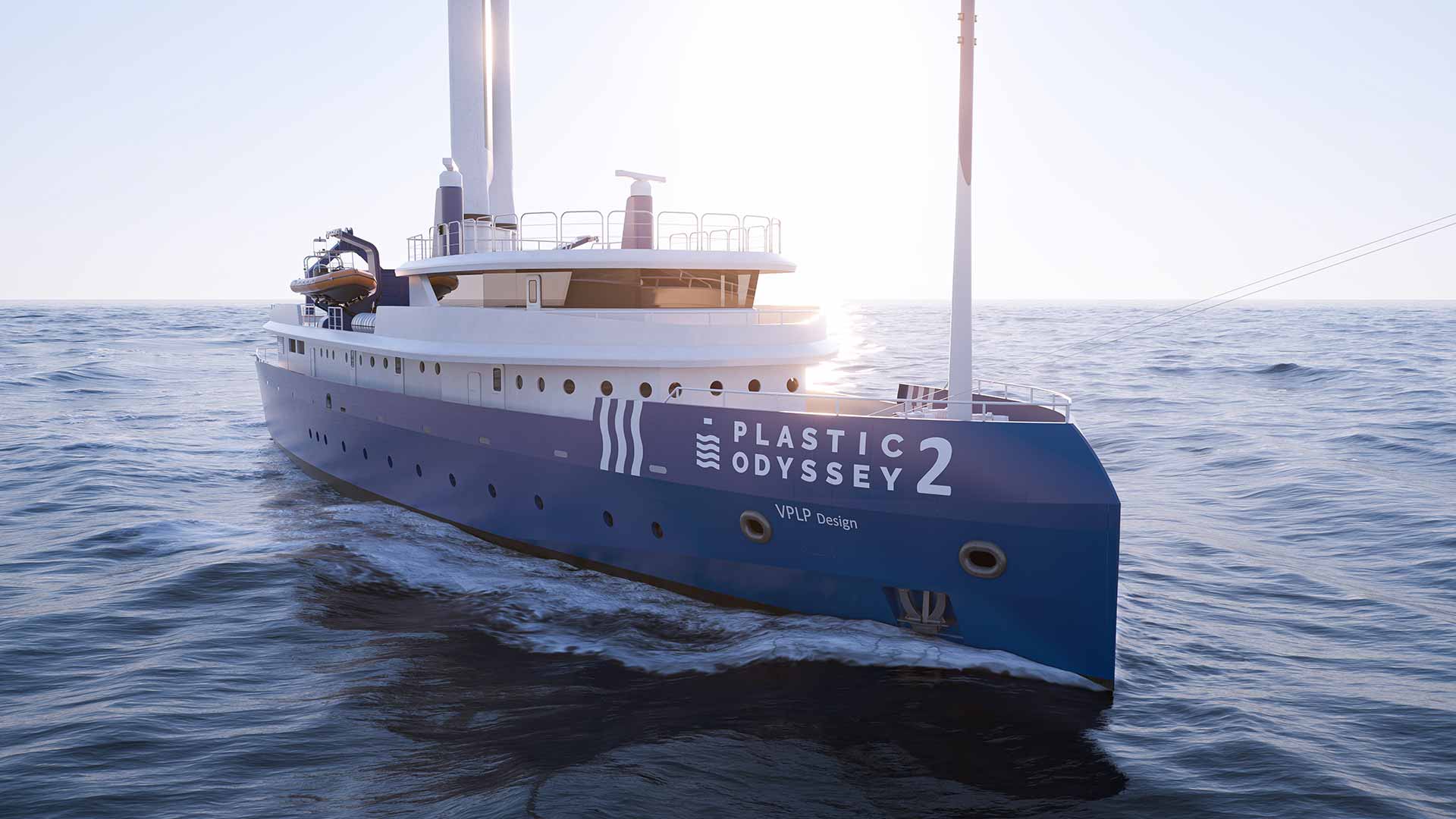
Plastic Odyssey: a new mission said to be impossible
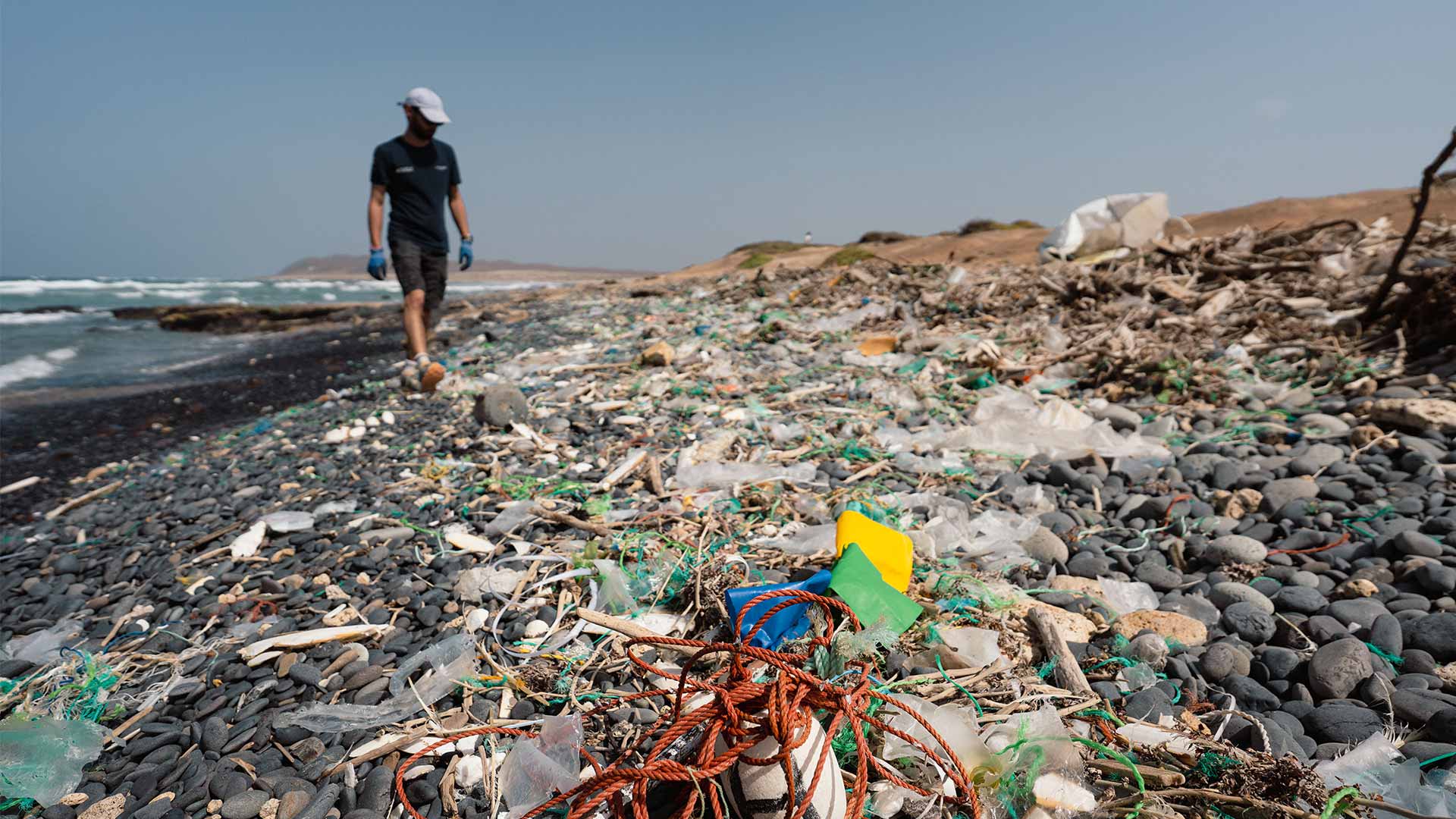
Marine sanctuaries under threat from plastic
There is a list of the most precious things humanity possesses: the World Heritage List. We know its stars, the Pyramids of Giza, Venice, Angkor… Far less well known are its 51 marine sites: remote reefs and islands in the middle of the ocean, several days’ sailing from the nearest port. No roads, no docks, no infrastructure of any kind.
Yet they are part of what keeps us alive. They serve as nurseries for fish, break storms before they reach the coast, store carbon and shelter a biodiversity we have explored only a tiny fraction of. They are sources of fish, of larvae, of birds, of a life that spreads far beyond their boundaries.
For a long time, we believed their isolation was enough to protect them. We hadn’t reckoned with plastic, which travels without a passport. Currents carry it in, beaches hold it, sun and salt grind it to crumbs. It carries additives, concentrates pollutants, ends up in plankton, fish and birds. Coral builds it into its skeleton. And all of this happens far from view, without a single witness.
Which leaves one simple question: how do we go and get it?
The new Plastic Odyssey vessel, a ship that didn’t exist
Working on these sites is a mission impossible. No vessel is designed to operate for weeks on end with no port calls and no shore support, nor to land equipment on coasts where no one has ever built a dock. We looked for that ship. We didn’t find it. So we decided to build it.
But before drawing a single plan, we went there. In Cape Verde, in the Indian Ocean, in the South Pacific, we tested ways of landing, loading, sorting and processing. We learned, in the field, what a ship needs to be able to do when the nearest port is several days away. The future vessel was born of those missions.
A 60-metre laboratory vessel, and not a metre too many
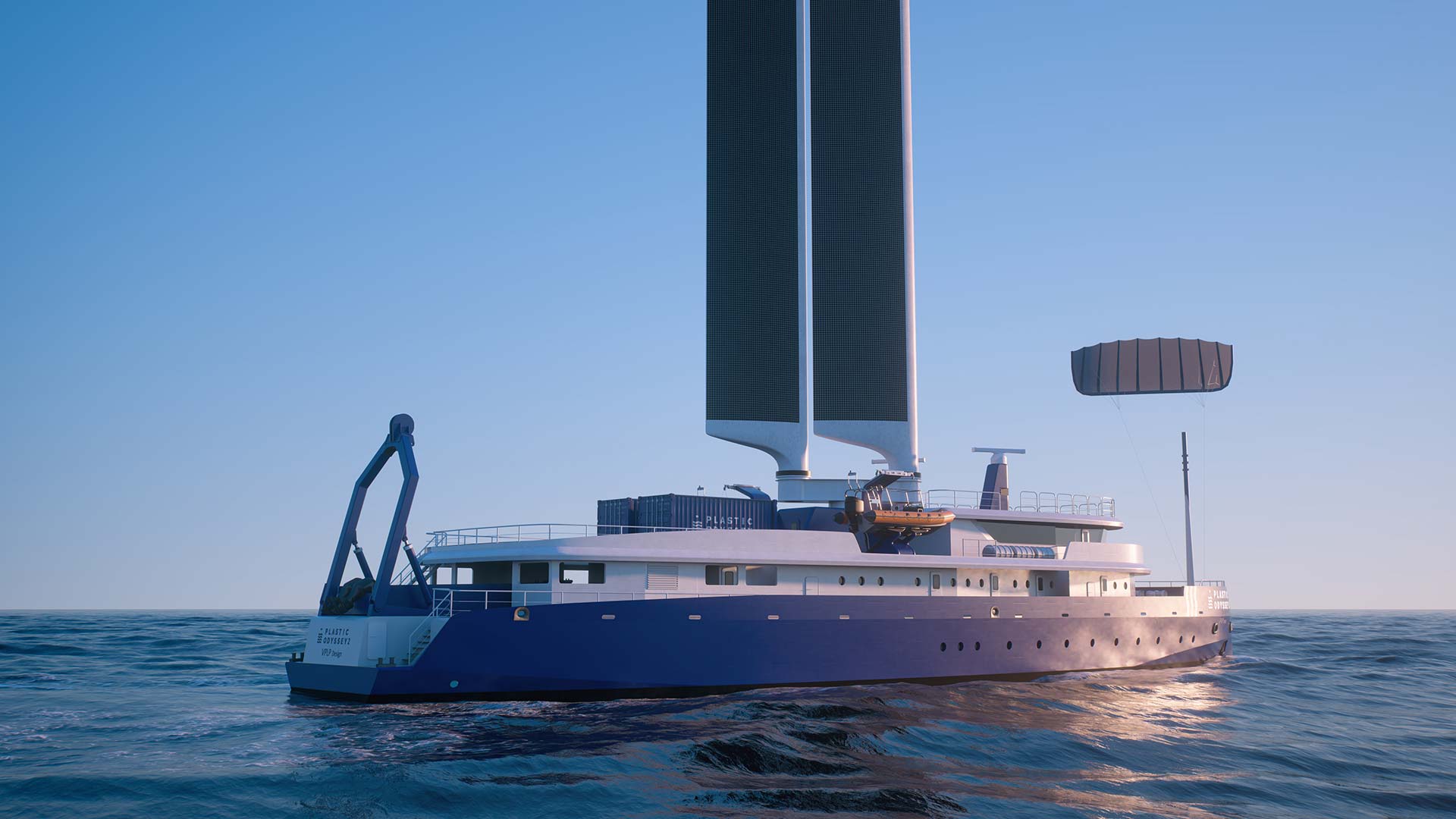
It will be 60 metres long and carry up to 200 tonnes: more than ten times the plastic estimated to be on Henderson Island, thirty-eight times the capacity of our current vessel. But what truly sets it apart is not its size, it’s what it will be able to do once it gets there. It is a complete intervention platform, able to reach a remote site, study it, process the waste it removes and leave again entirely self-sufficient. A restoration laboratory that moves.
Restoring marine sites: landing where no one can land
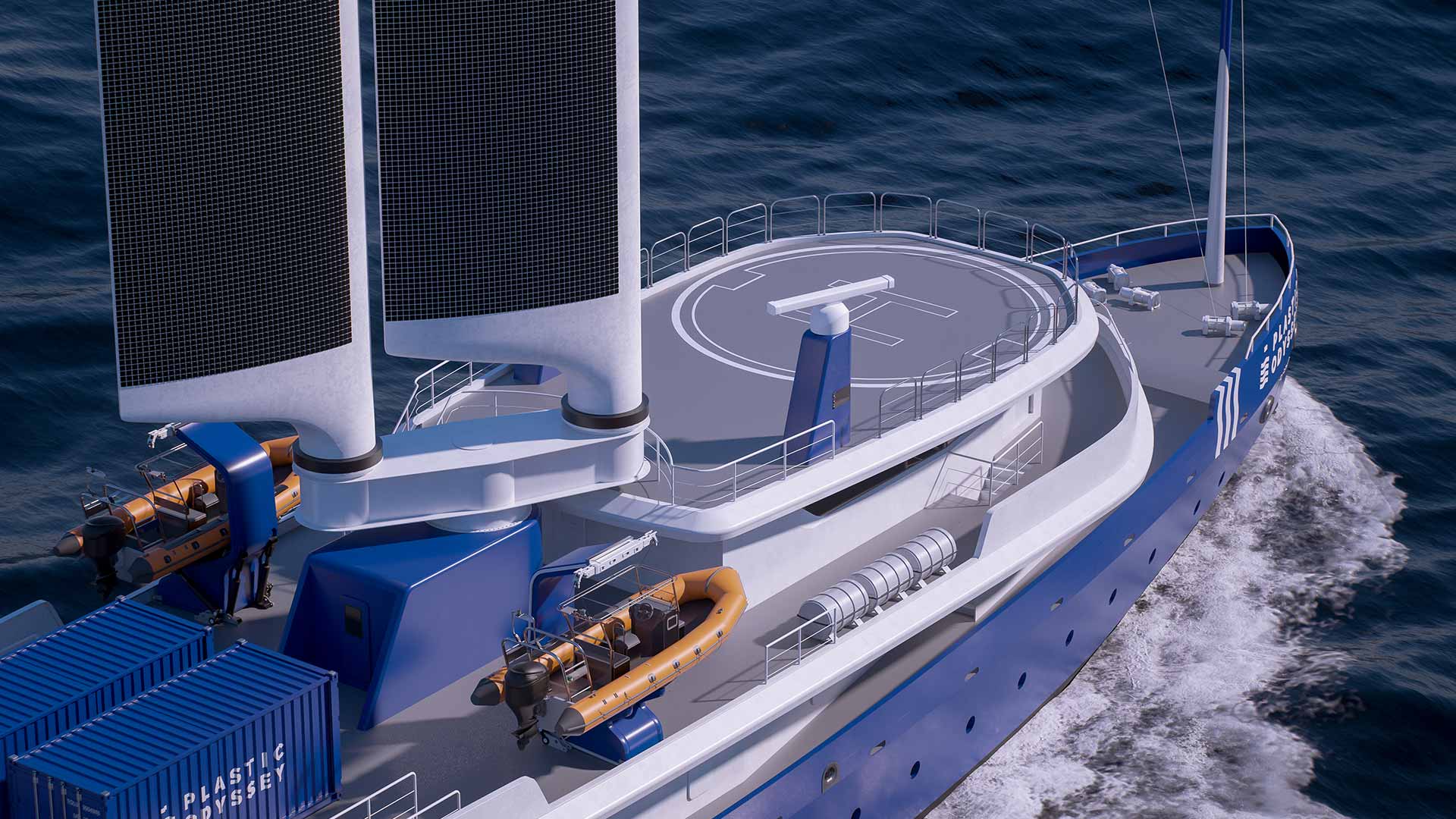
Reaching an island where no ship can moor means the vessel must bring its own means of access. Light craft will shuttle to the shore, even where no anchorage exists. And before them, drones will have located and measured the plastic pollution. Rather than sending teams onto a beach with no bearings, we will arrive with a map, to know where to intervene and to measure the amount of waste removed.
Thirty-four people will live and work on board, bringing together skills currently scattered across several teams: scientists, technicians, site managers and residents of the territories concerned.
A wind-powered, energy-self-sufficient vessel
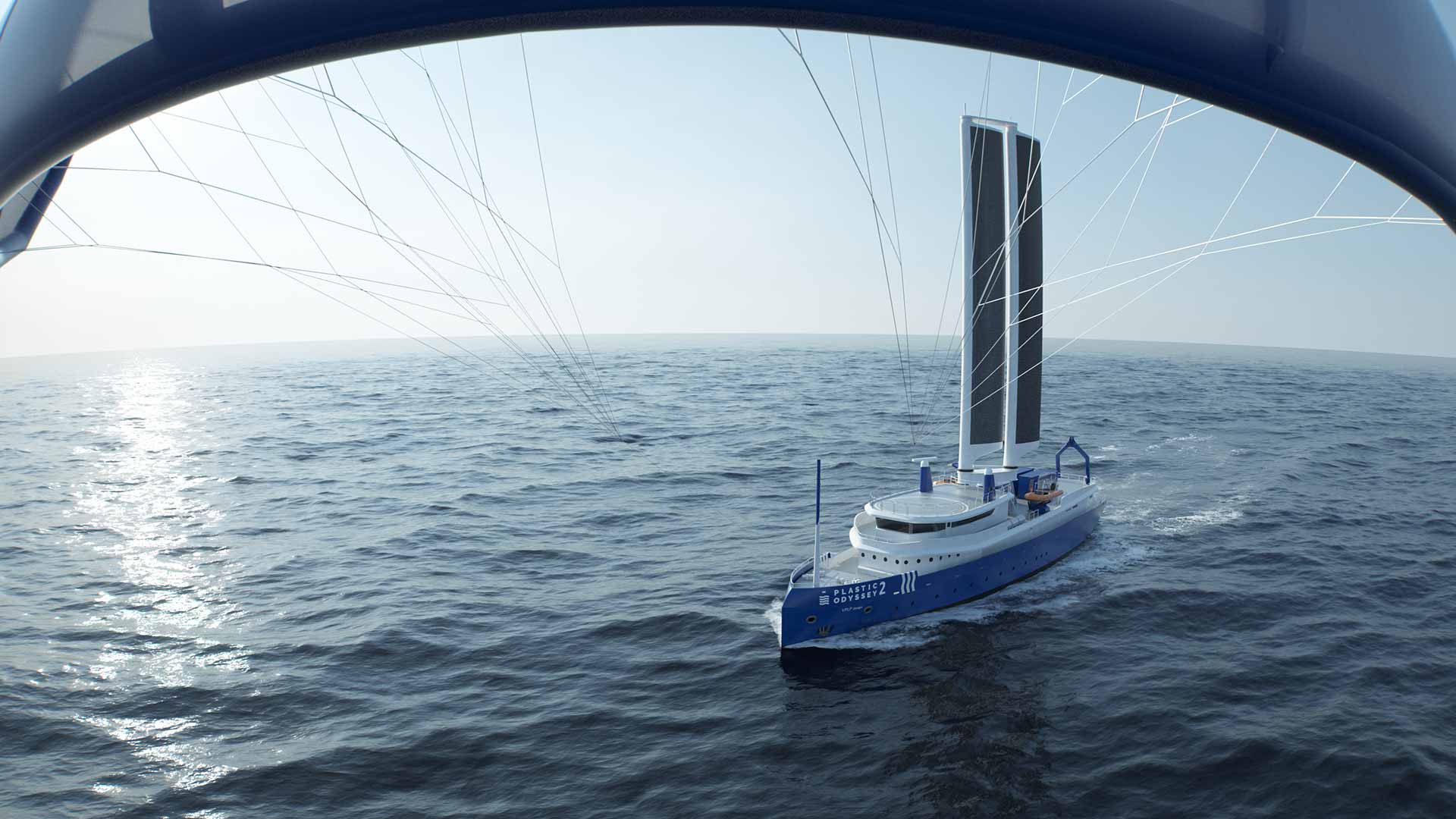
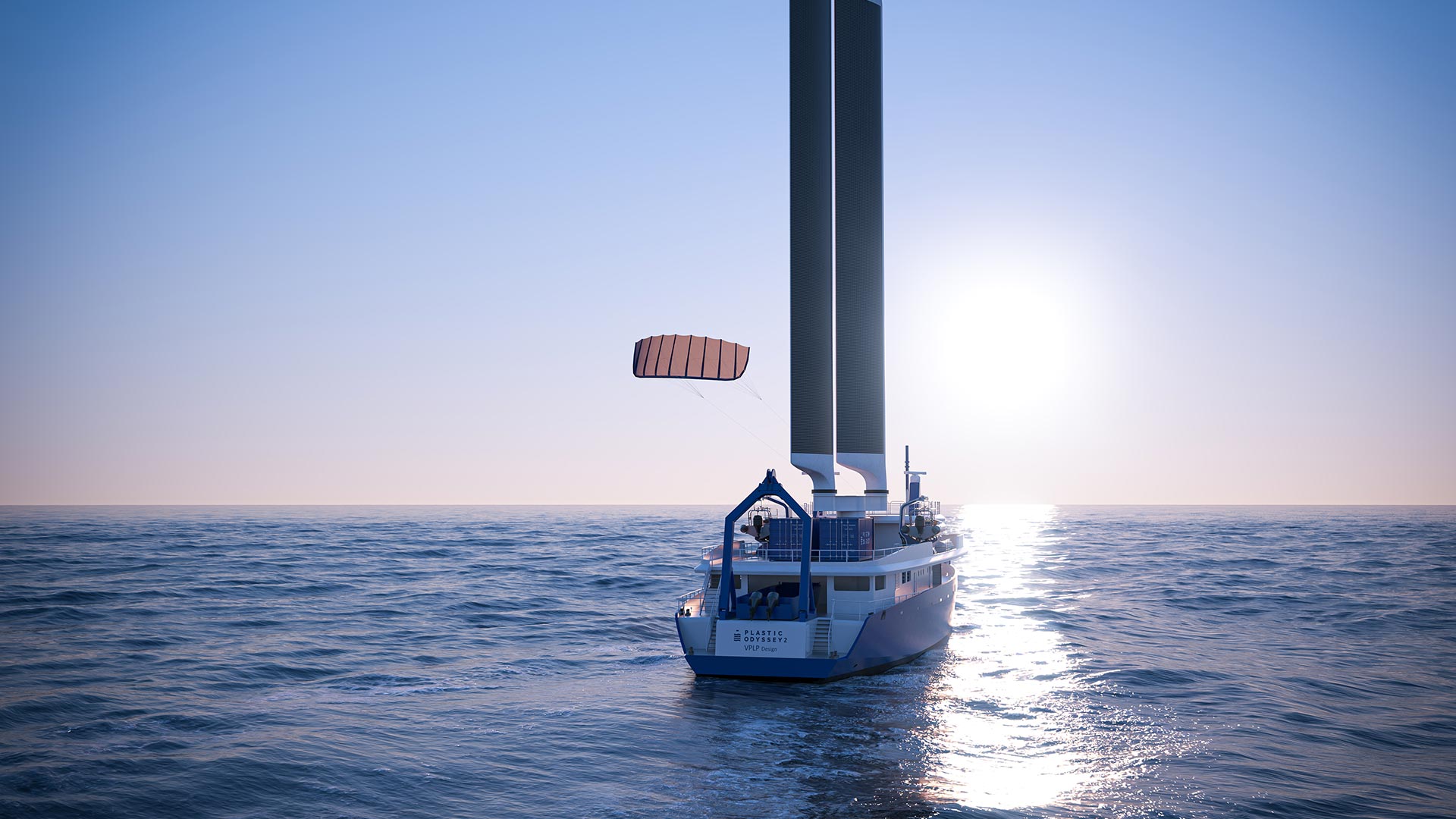
The ship will be driven by two rigid wingsails, steered like rudders. By our calculations, its propulsion will emit 94% less CO₂ than that of a diesel ship of the same capacity. But sail is not just a matter of carbon footprint. Offshore, no refuelling is possible, and every litre of fuel on board counts. The less a ship depends on its reserves, the longer it can stay on site. And our aim is not to cross these sanctuaries: it is to work on their conservation.
Science at the heart of the UNESCO expeditions
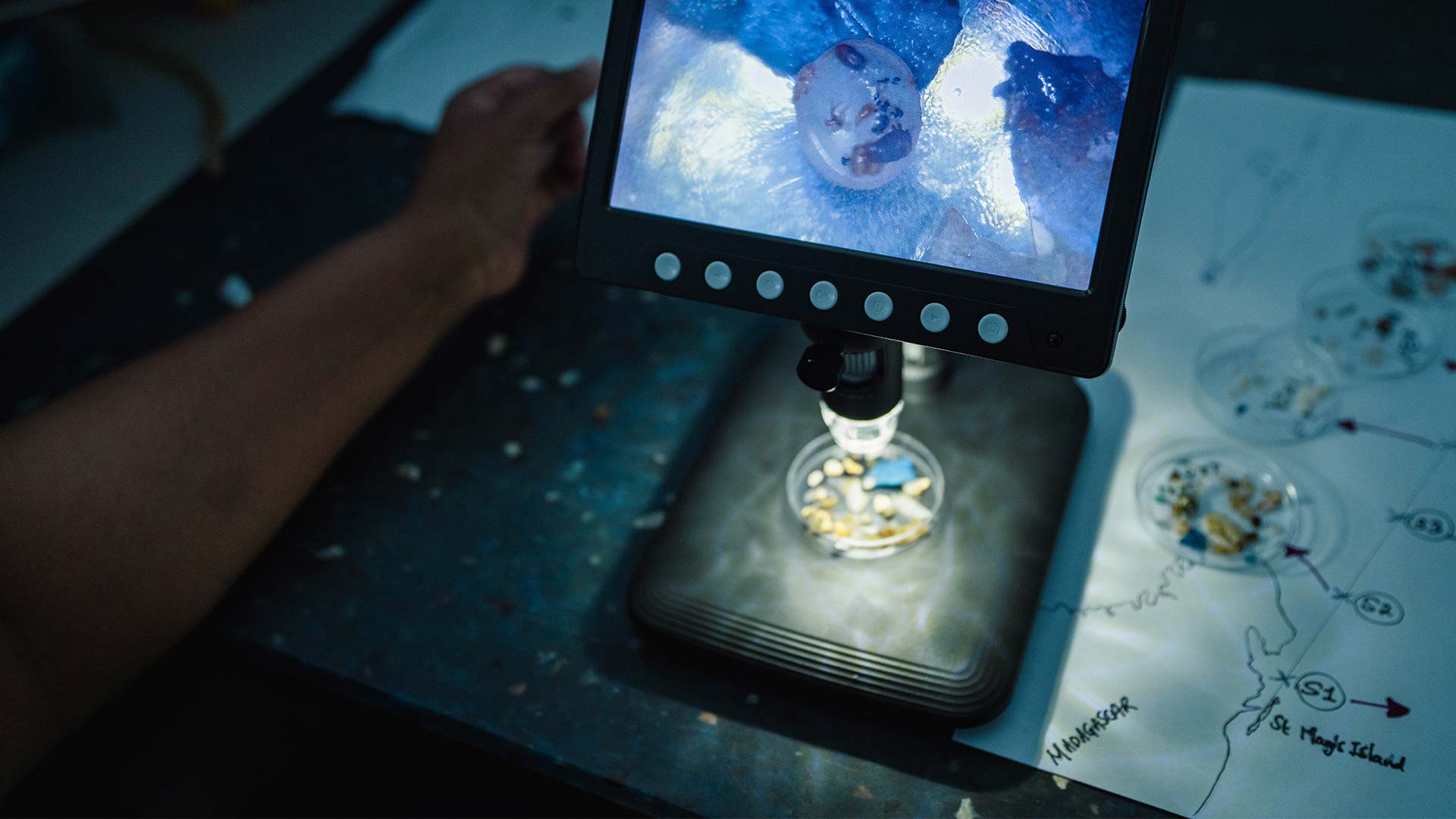
This vessel will work on protected sites deemed priorities, where plastic is doing damage and where almost no one can go. Each mission will begin by documenting the state of the site, followed by the intervention, then a new set of measurements. What was removed, where, how much, how? What has changed? Two onboard scientific laboratories will analyse samples during the mission itself, without waiting for the return to port. On the marine-ecosystem restoration side, a bioreactor will grow coral for replanting.
The ship will be as much a scientific instrument as a field tool. Its missions are being prepared with UNESCO, which manages access to the sites, and with the IRD, our scientific partner.
Why launch this new mission now?
Because no existing ship combines all these functions. And because we know where to start: the 51 sites are identified, mapped and documented, and we know which are most at risk. The problem is not finding them, it’s reaching them. Three and a half years of field trials have taught us to land, load, process, produce data and operate far from any port. With this new ship, we are not leaping into the unknown; we are changing scale.
A new Plastic Odyssey vessel in 2029
None of this has been built yet. The plans are progressing and the specifications are still evolving. Construction is due to begin in 2027, sea trials will follow in 2028, and the first missions in the sanctuaries are scheduled for 2029. From there, the ship will move from sanctuary to sanctuary, until the last one.
It will not solve global plastic pollution on its own: 80% of marine plastic comes from land, and that is where the real battle will be fought, for decades to come. Its role is more specific: to remove plastic from the sanctuaries that can still be saved. What must remain are the data, the methods and the people able to take over. That is already what happened in Senegal, where the solutions brought back from our first round-the-world expedition now live their own lives. Without us. And that is the best news there is.
Join the adventure, there’s still room on board
On Henderson, in Cape Verde, at Saint-Brandon, we learned one thing: what looks impossible from afar becomes, up close, a series of concrete problems to be solved one at a time. This ship will be nothing more than that: solutions placed end to end. Only bigger.
Now we want to build it with you. Rather than depending on a single patron, we want thousands of people to carry this project alongside us, each buying a share in this ship and its adventure. The price is not yet set, but you can already support this adventure by making a donation. We will keep you informed of the next steps.
The ship doesn’t exist yet. There’s still room on board.