 Live
Live Give
Give




 Store
Store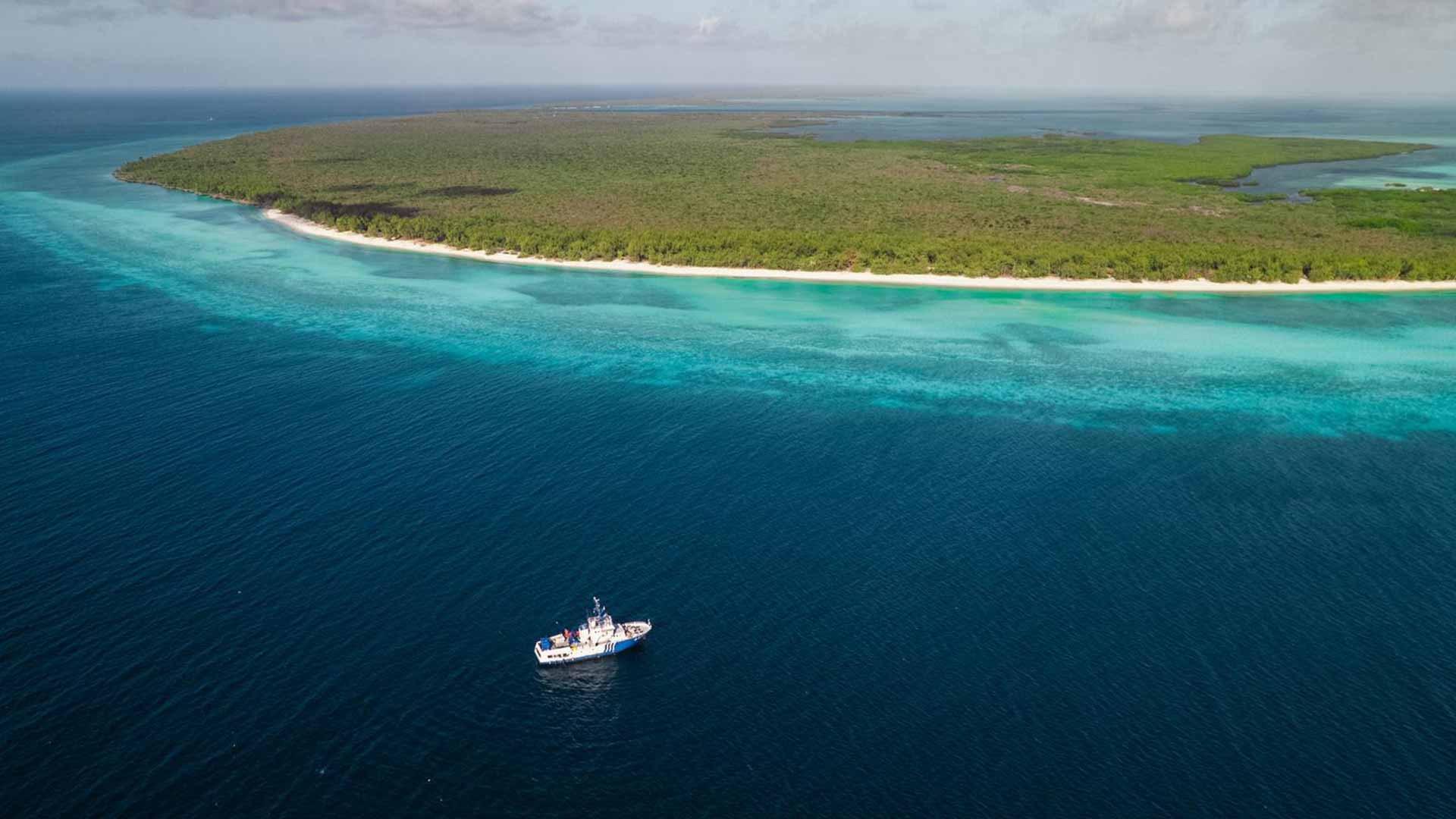
November 2025: News from the Plastic Odyssey expedition
Aldabra Mission – October 2025
Aldabra: a clean-up mission on an atoll frozen in time
Imagine an island where giant tortoises roam freely, where the ocean seems to blend seamlessly into the sky, and where humans have left (almost) no trace. This place truly exists: Aldabra Atoll, a jewel of the Indian Ocean, listed as a UNESCO World Heritage site and considered one of the most pristine ecosystems on the planet.
Almost pristine.
Because even more than 1,000 kilometres from the nearest inhabited island, plastic eventually finds its way ashore, carried by ocean currents and reminding us that nowhere on Earth is spared. Jerrycans, ropes, fishing floats, thousands of flip-flops, bottles, caps, children’s toys: an unlikely collection that tells the story of our dependence on plastic, even in places where no one lives.
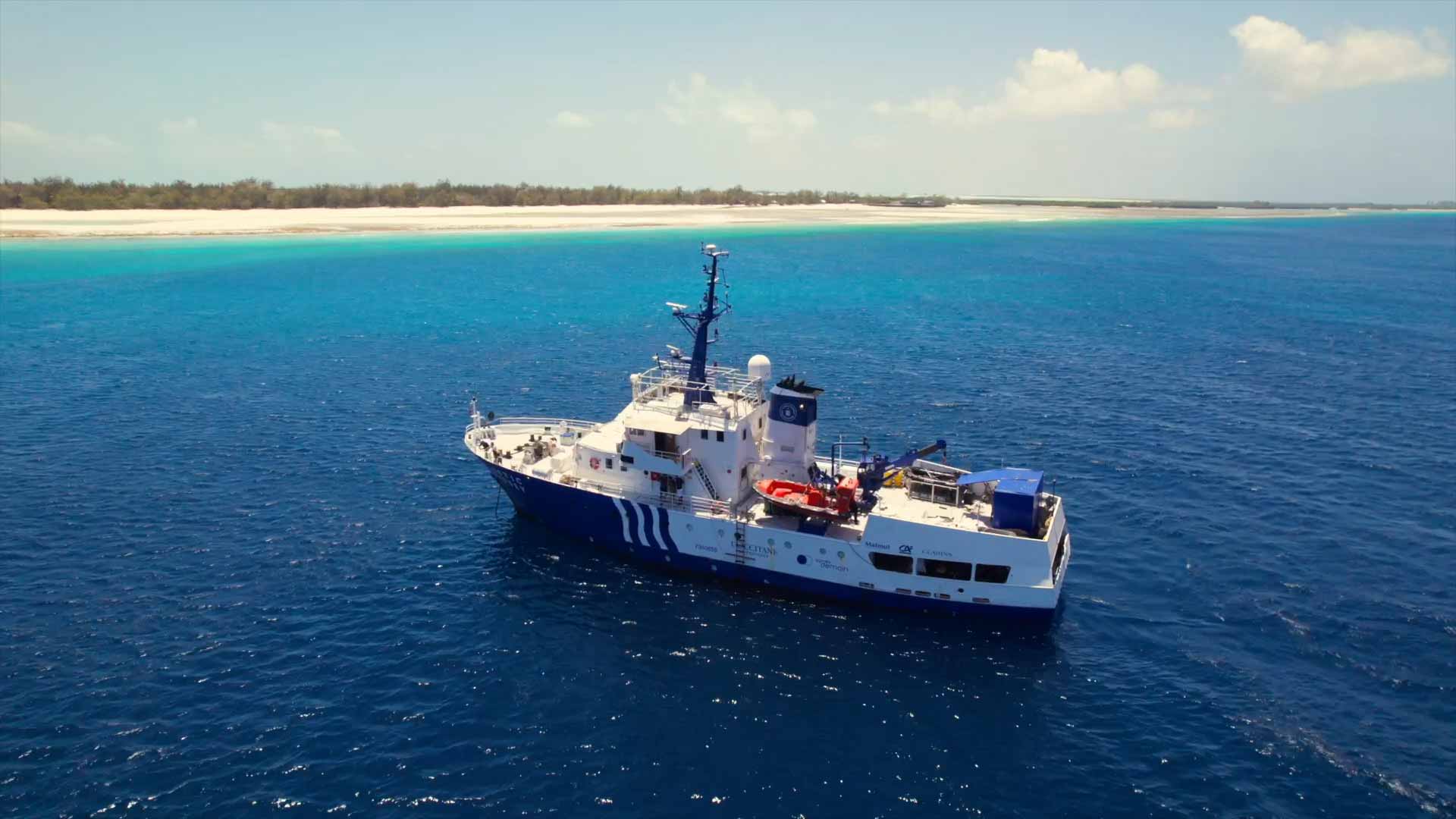
This is where we made a stopover in October, for a slightly crazy mission: to follow in the footsteps of Cousteau and, before him, Darwin, and clean up this almost inaccessible atoll of XXL proportions. Our objective: to carry out an initial reconnaissance mission to support the local teams of the Seychelles Islands Foundation in preparing what could become the largest desert island clean-up ever undertaken; to document the true extent of pollution on the atoll using high-precision drone mapping; and to test new methods for clean-up operations and living in such extreme conditions.
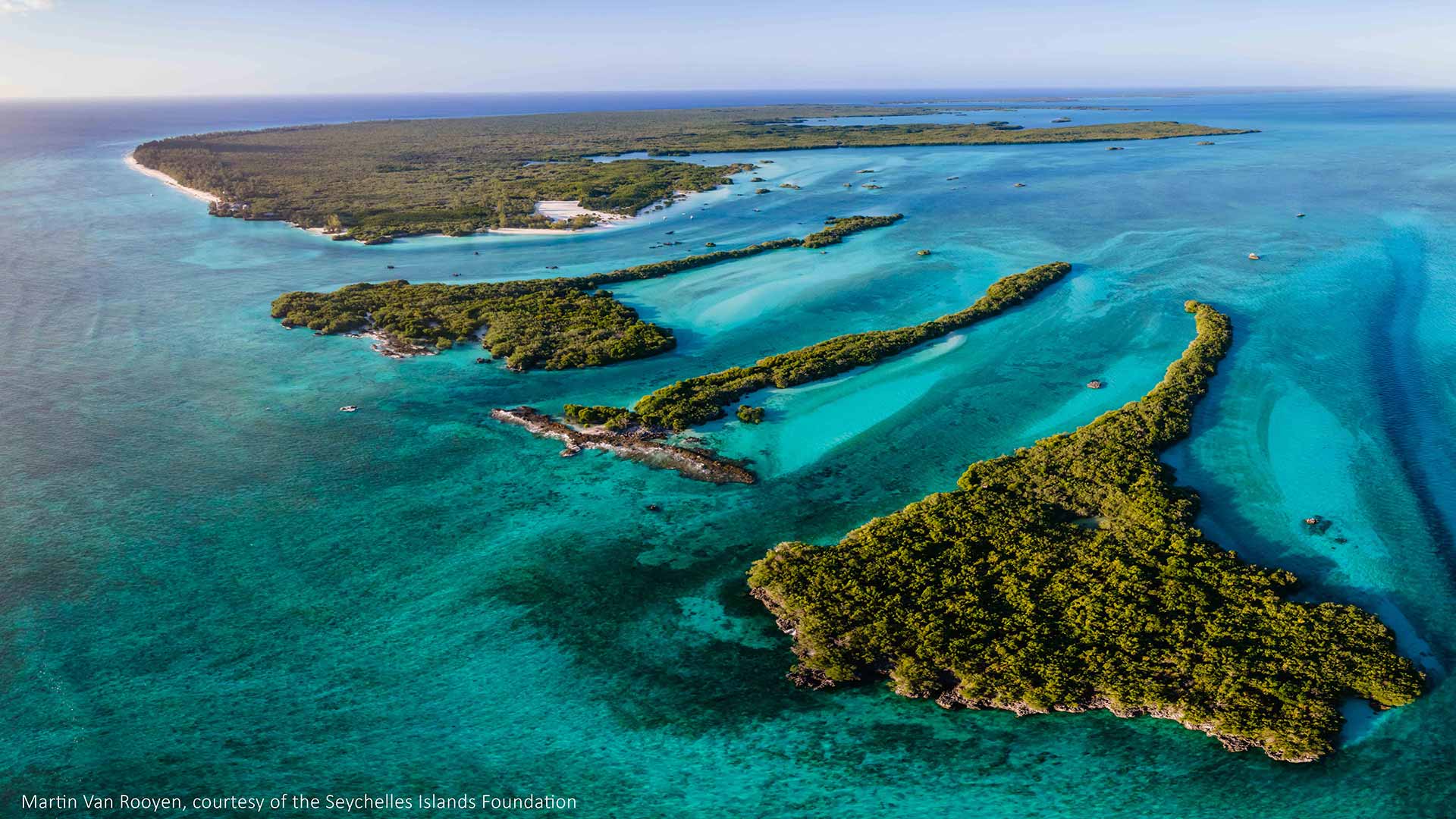
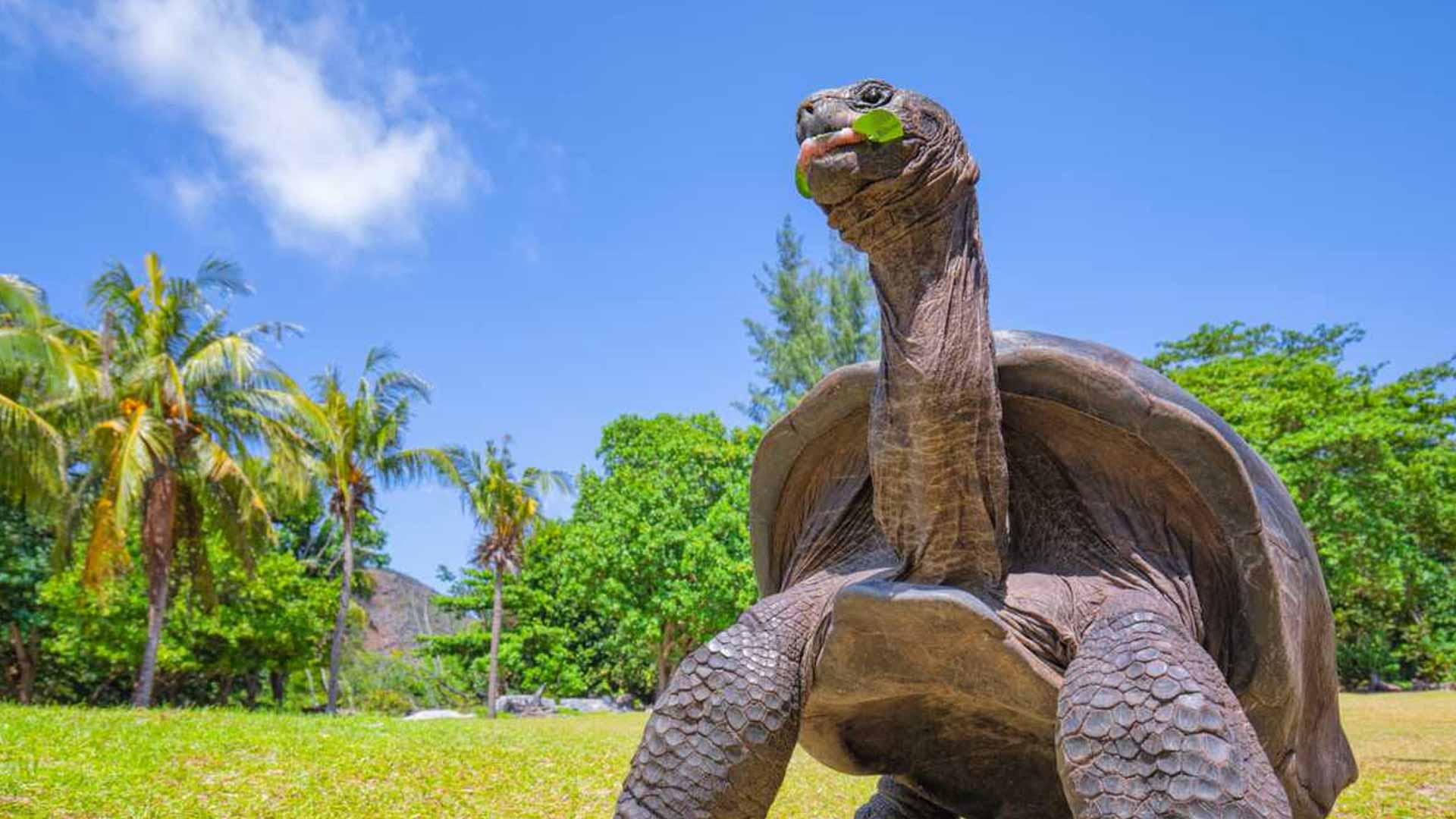
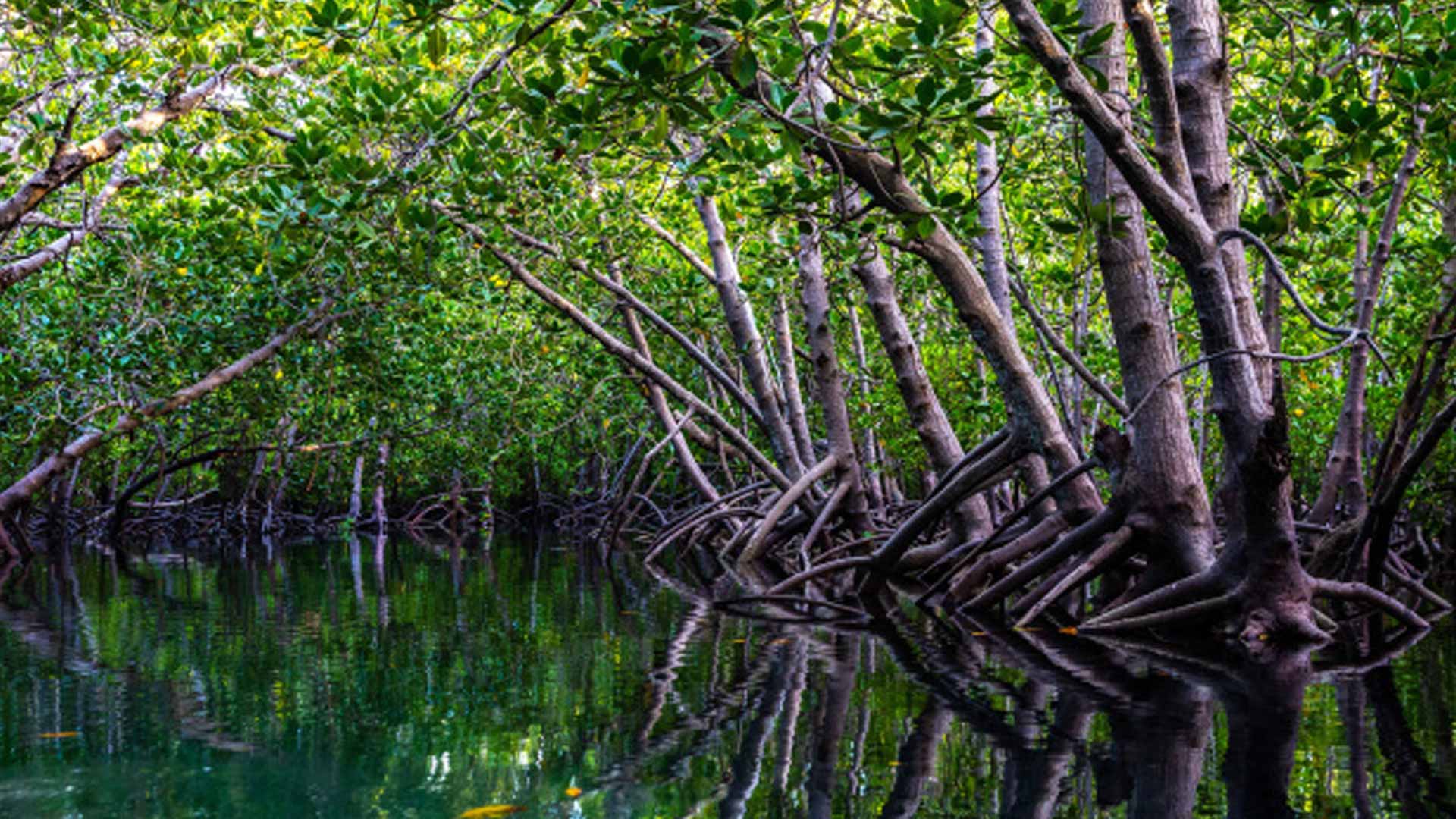
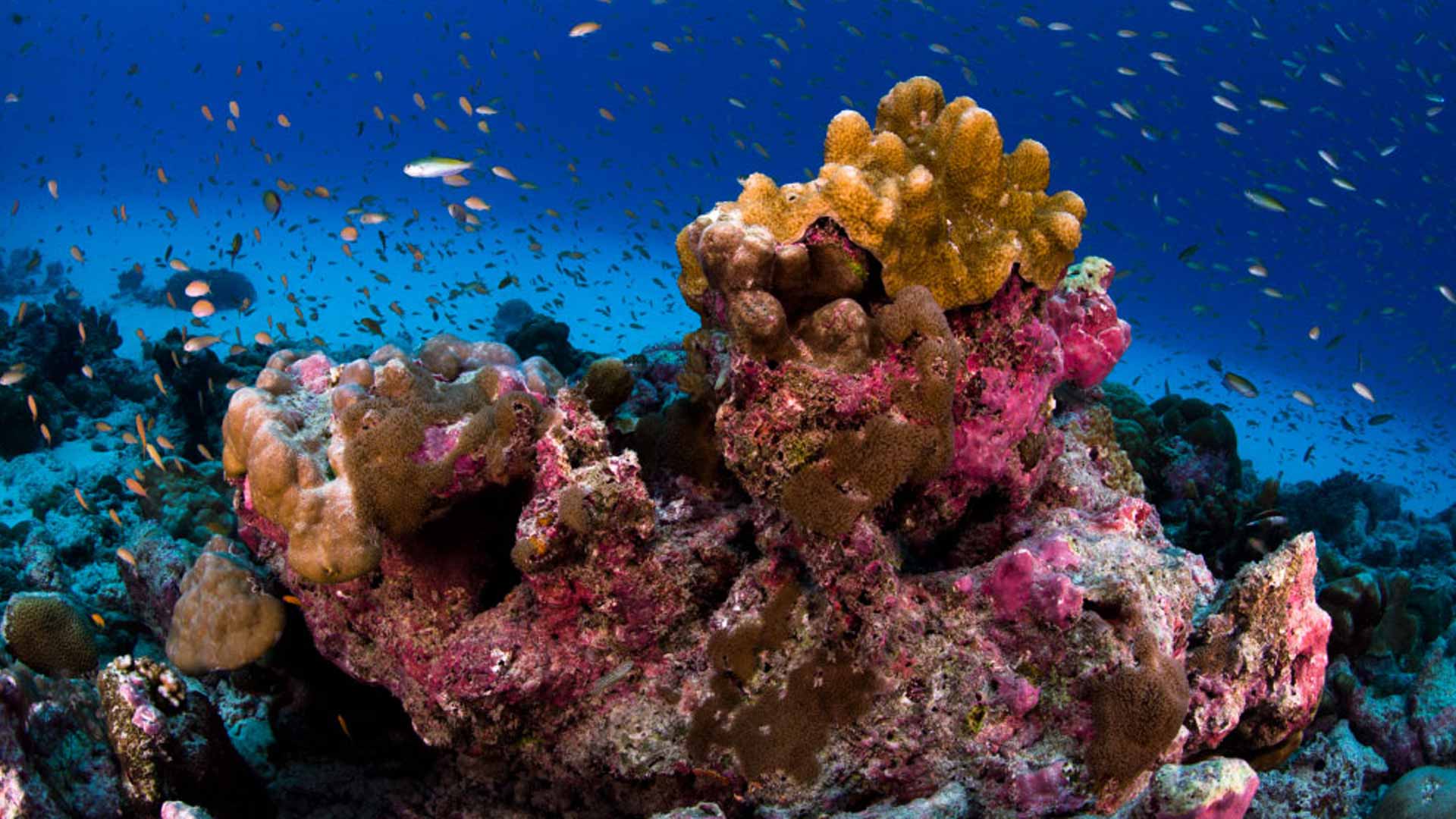
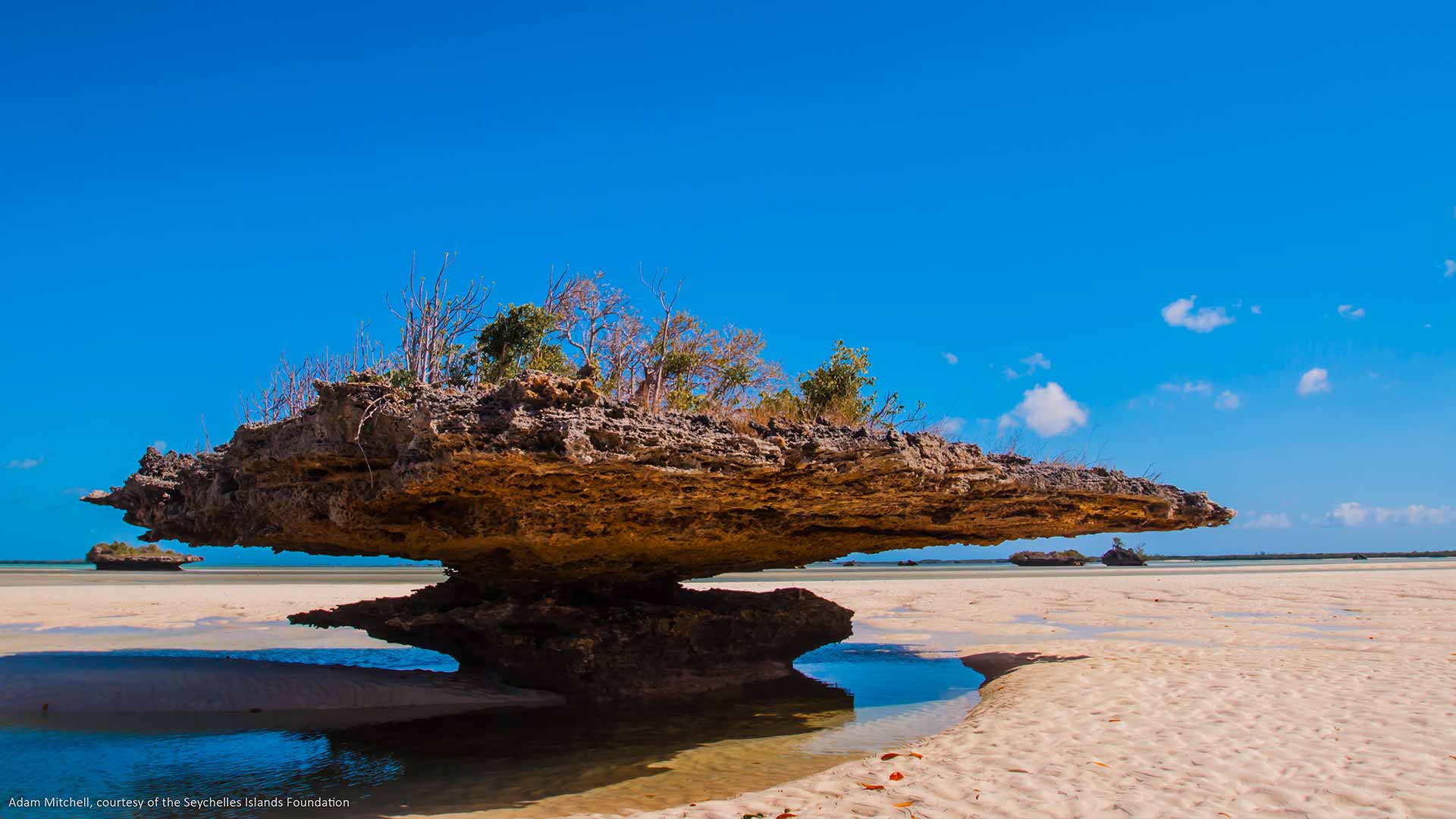
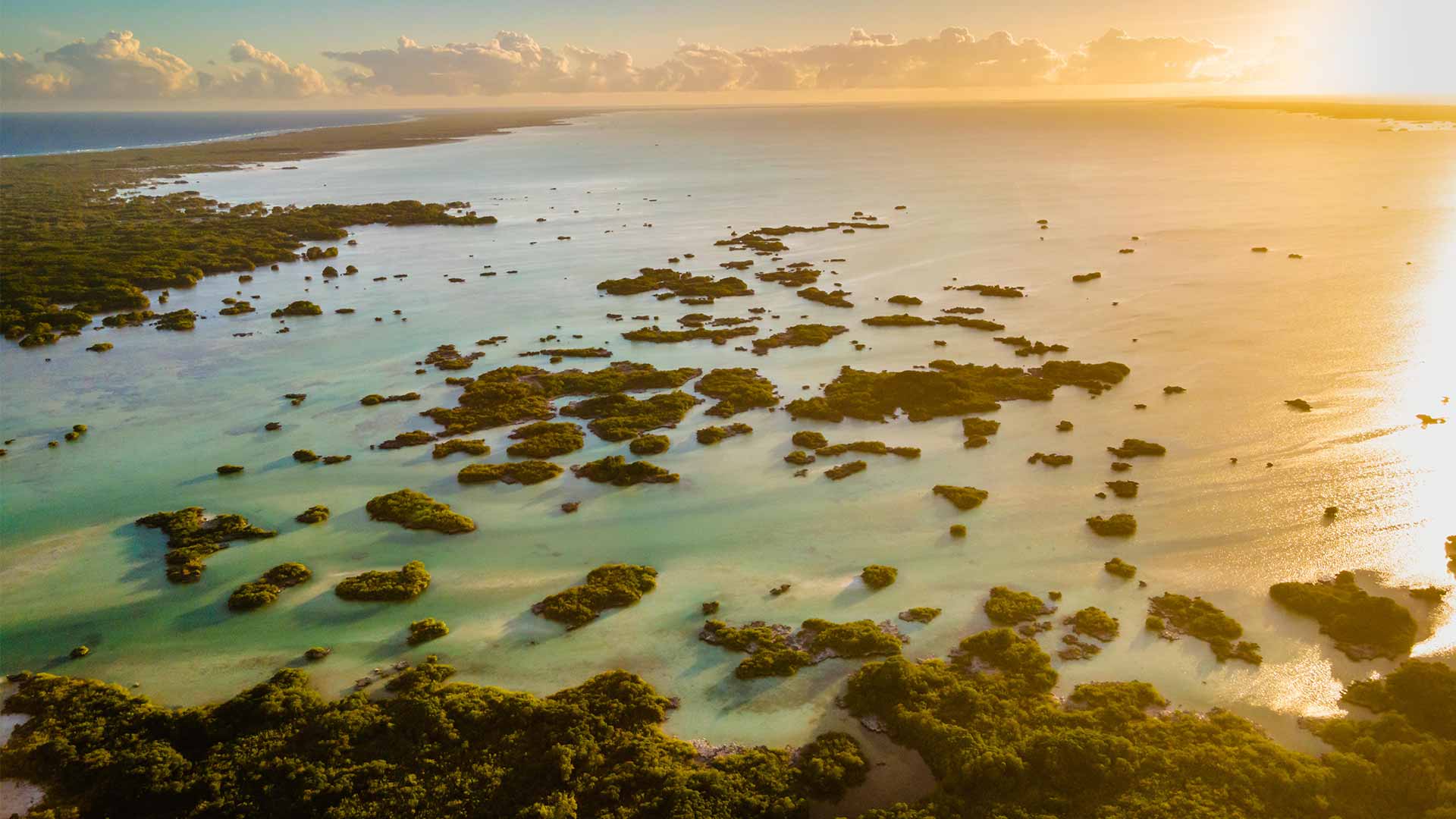
On the agenda: long walks along the island’s exposed southern coastline, identifying areas to be cleaned, testing the extraction of waste sometimes stranded for years above sharp karst rock barriers, preparing logistics for isolated base camps (water, energy, food, etc.), and a few epic encounters with the local residents (especially the ones with shells).
The result: a detailed pollution map, promising new extraction techniques, the first prototypes of furniture manufactured directly on the atoll, and one more step toward preparing a large-scale clean-up operation.
And above all, a human adventure that reminds us that even the last remaining paradises are no longer completely untouched, but that action is still possible.
To dive into the expedition and explore the logbook, photos, and first video episodes, click here: https://aldabra.plasticodyssey.org/
Saint Brandon Mission – November 2025
Saint Brandon: when Coco Island caught us off guard
We set off feeling confident: a small isolated island off the coast of Mauritius, a few days ahead of us, and a fairly reasonable objective of removing 1 to 2 tonnes of stranded plastic. That was before setting foot on Coco Island, one of the remote islands of the Saint Brandon archipelago.
Within minutes, reality hits us hard. The beach is not really a beach, but a multicoloured mosaic of plastic waste stretched across square kilometres.
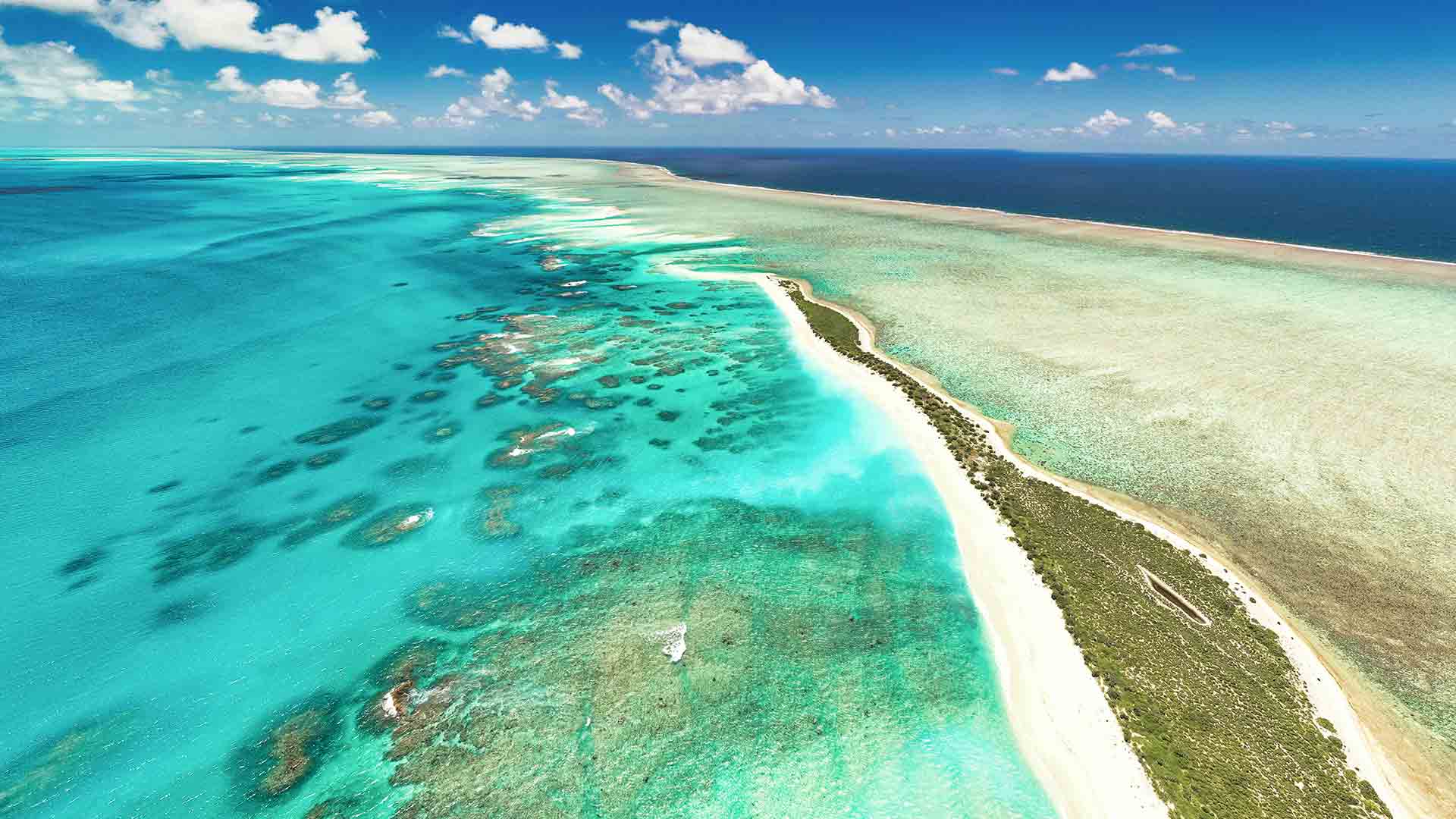
We start collecting, and by mid-day the figures are already surprising: 1.7 tonnes collected. With 8 people. In a single morning. On less than a tenth of the island.
It quickly becomes clear that the task far exceeds anything we had imagined. Coco Island (5 km long / 1 km wide) is literally covered in plastic. And the bad news is that this plastic is extremely difficult to collect. It breaks down into small fragments and crumbles between our fingers. You can physically feel the urgency of removing this waste as quickly as possible, before it permanently enters the archipelago’s ecosystem in the form of microplastics.
On board, it is all hands on deck. We shred, extrude and compact the material to fit as much as possible on board without exceeding the critical 7-tonne limit required to keep the Plastic Odyssey stable in increasingly rough seas. The vessel turns into a true ant colony, covered from end to end with waste ready to be processed.
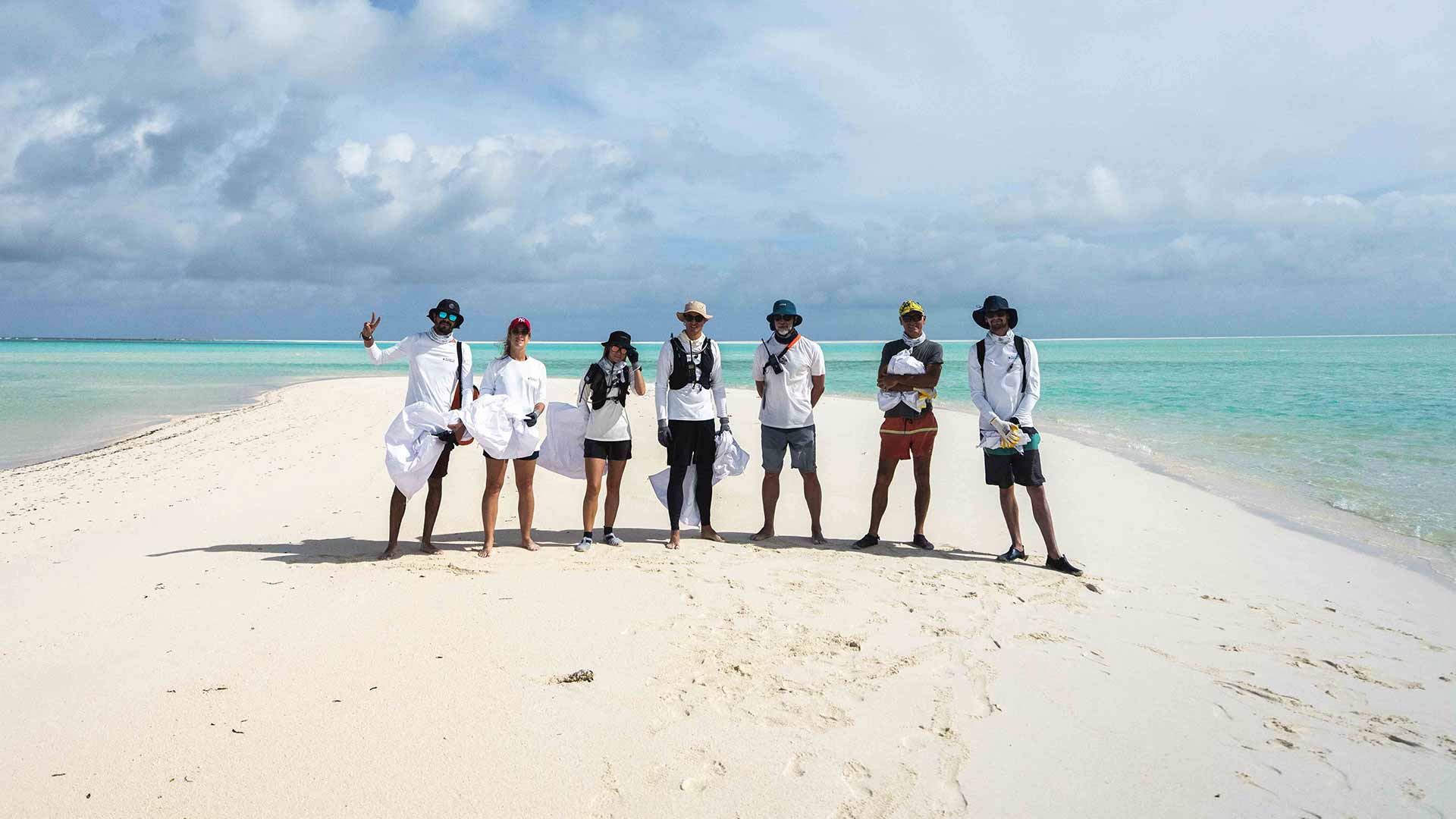
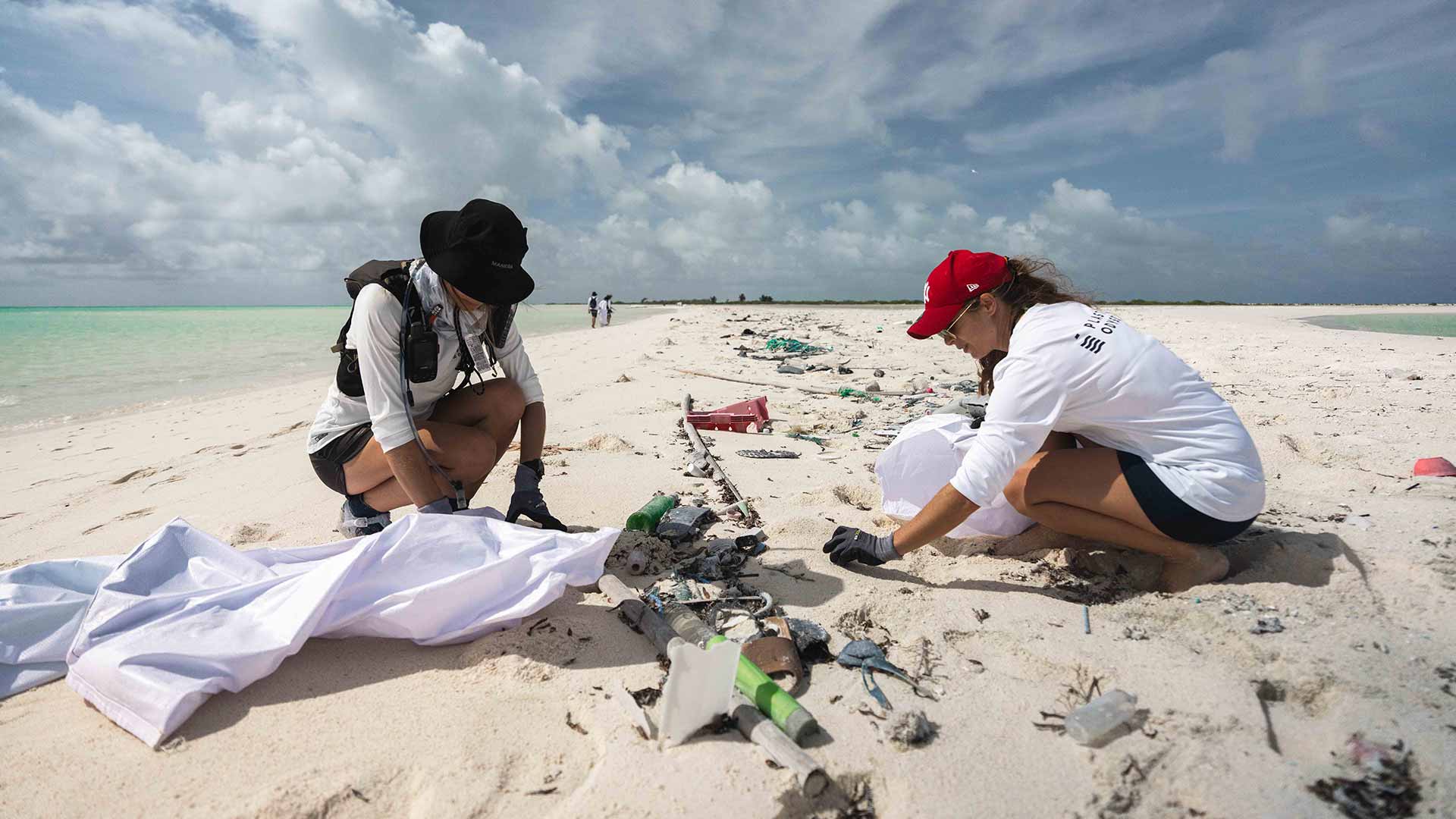
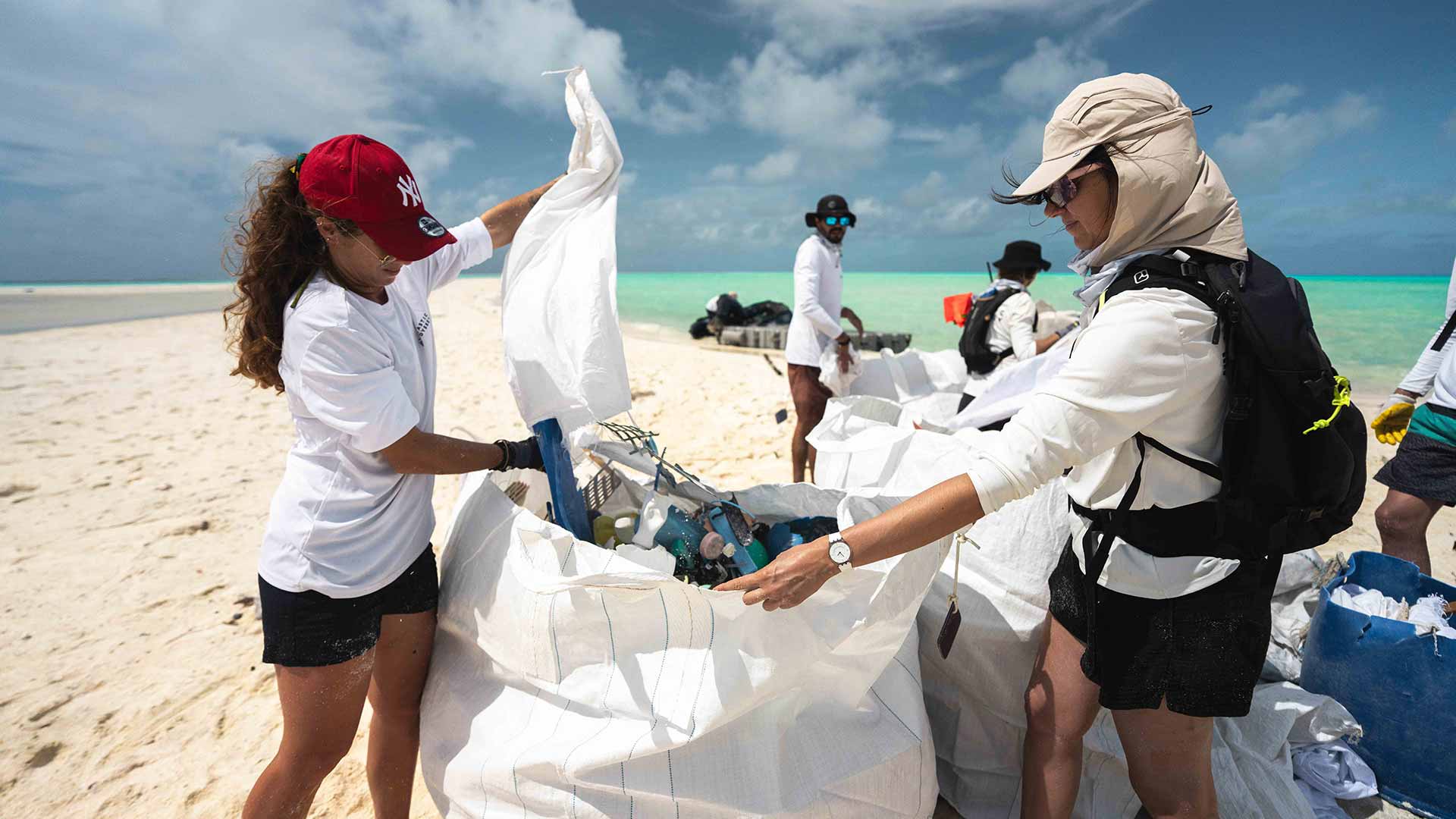
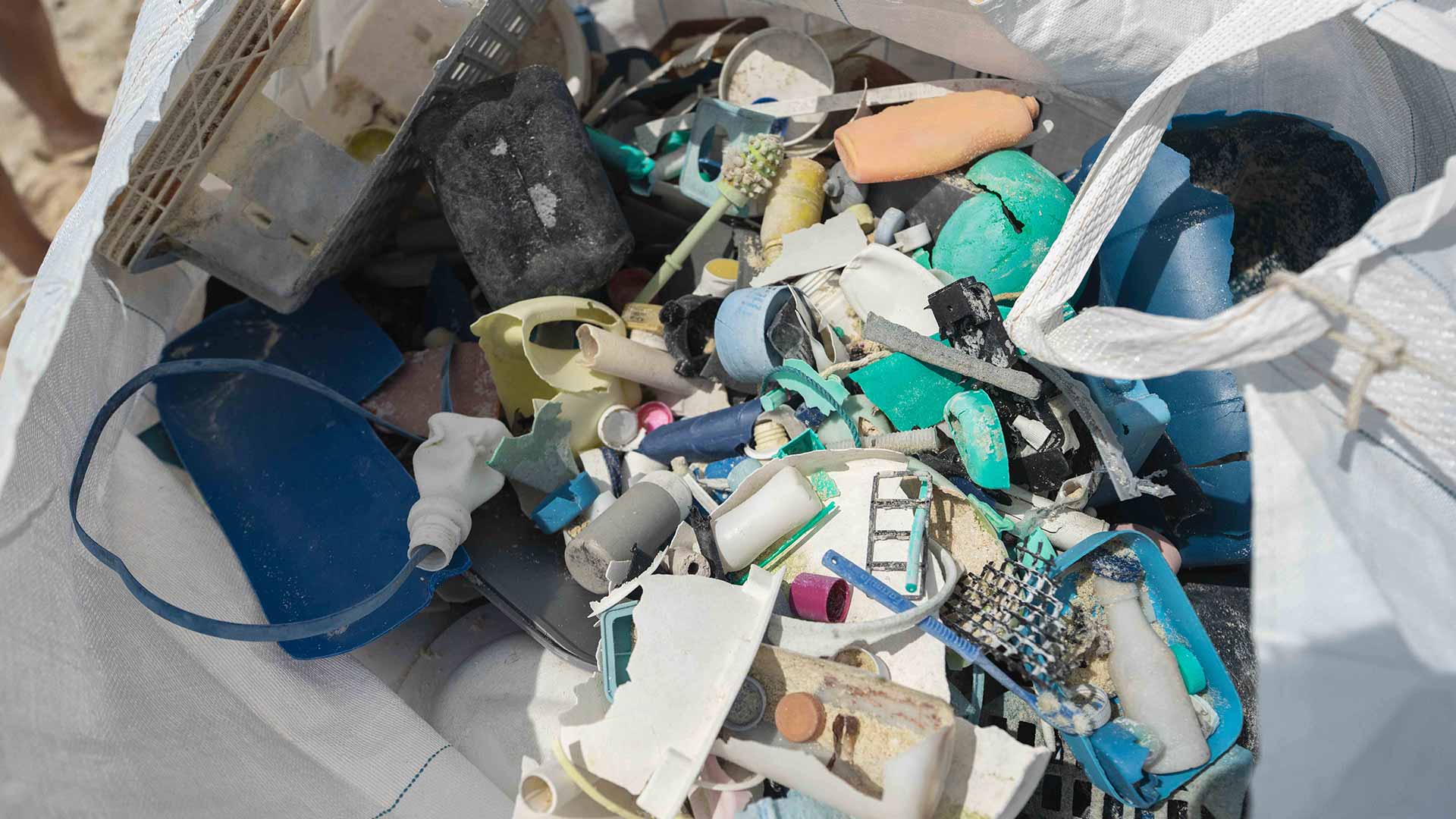
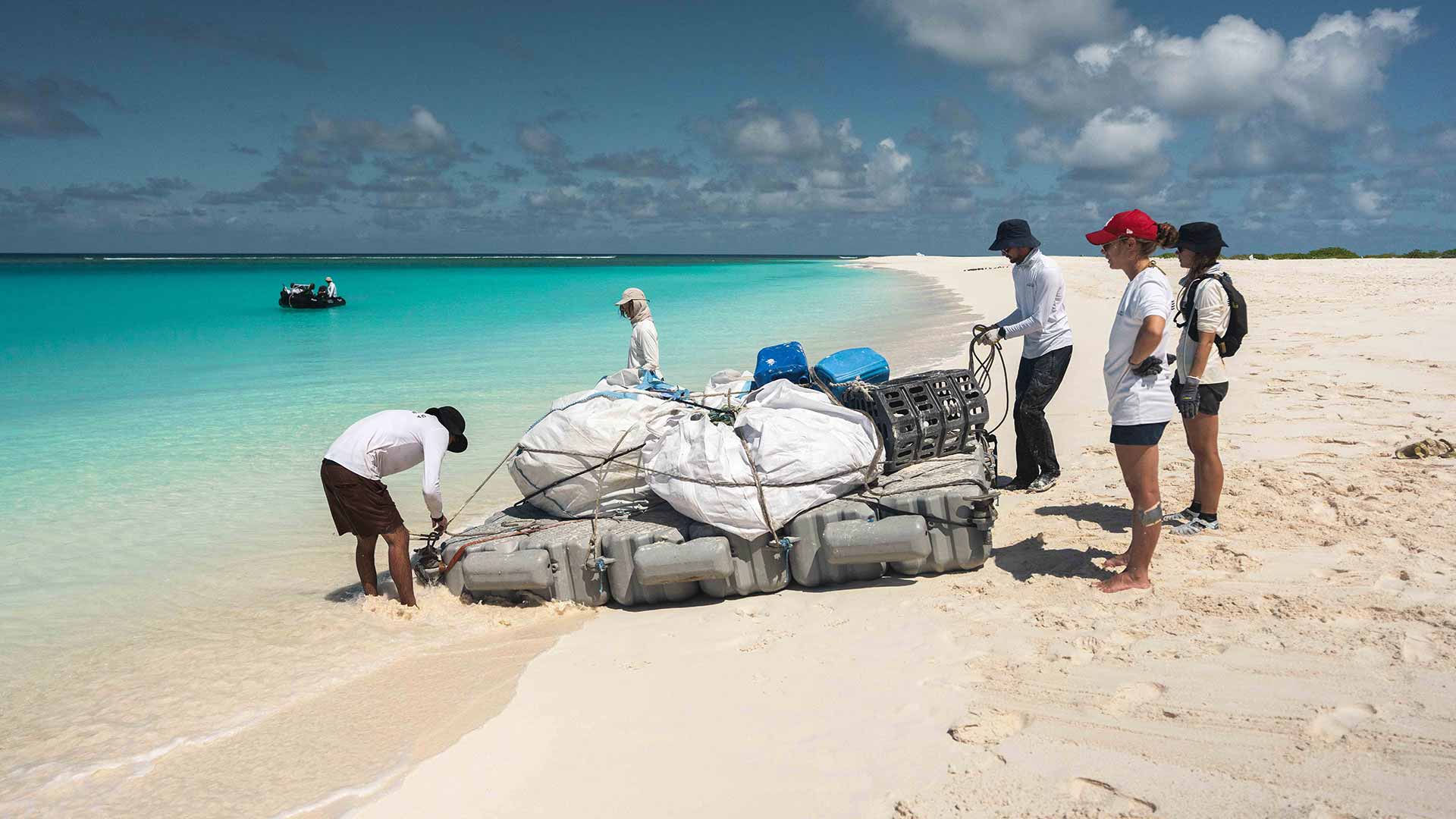
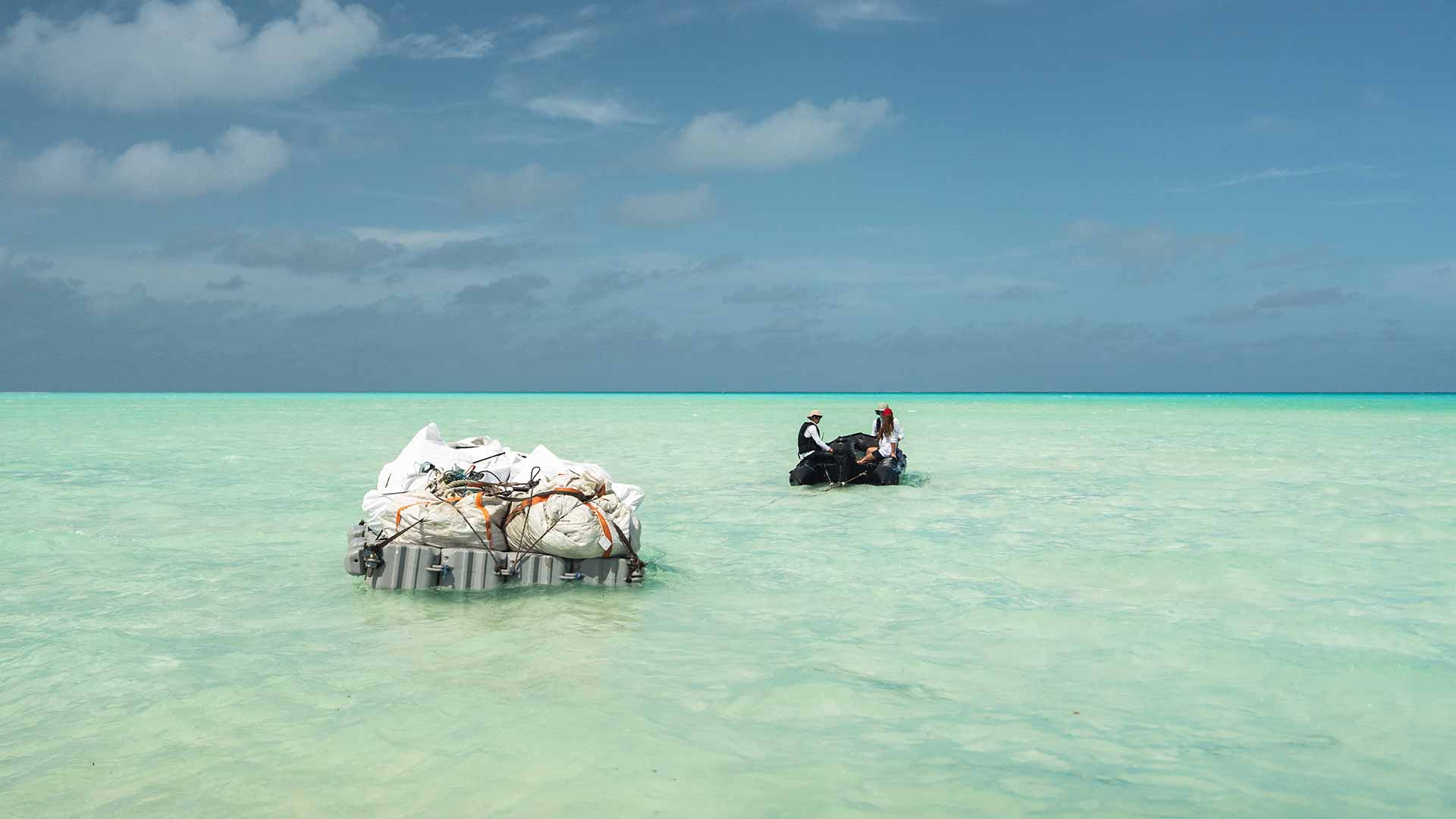
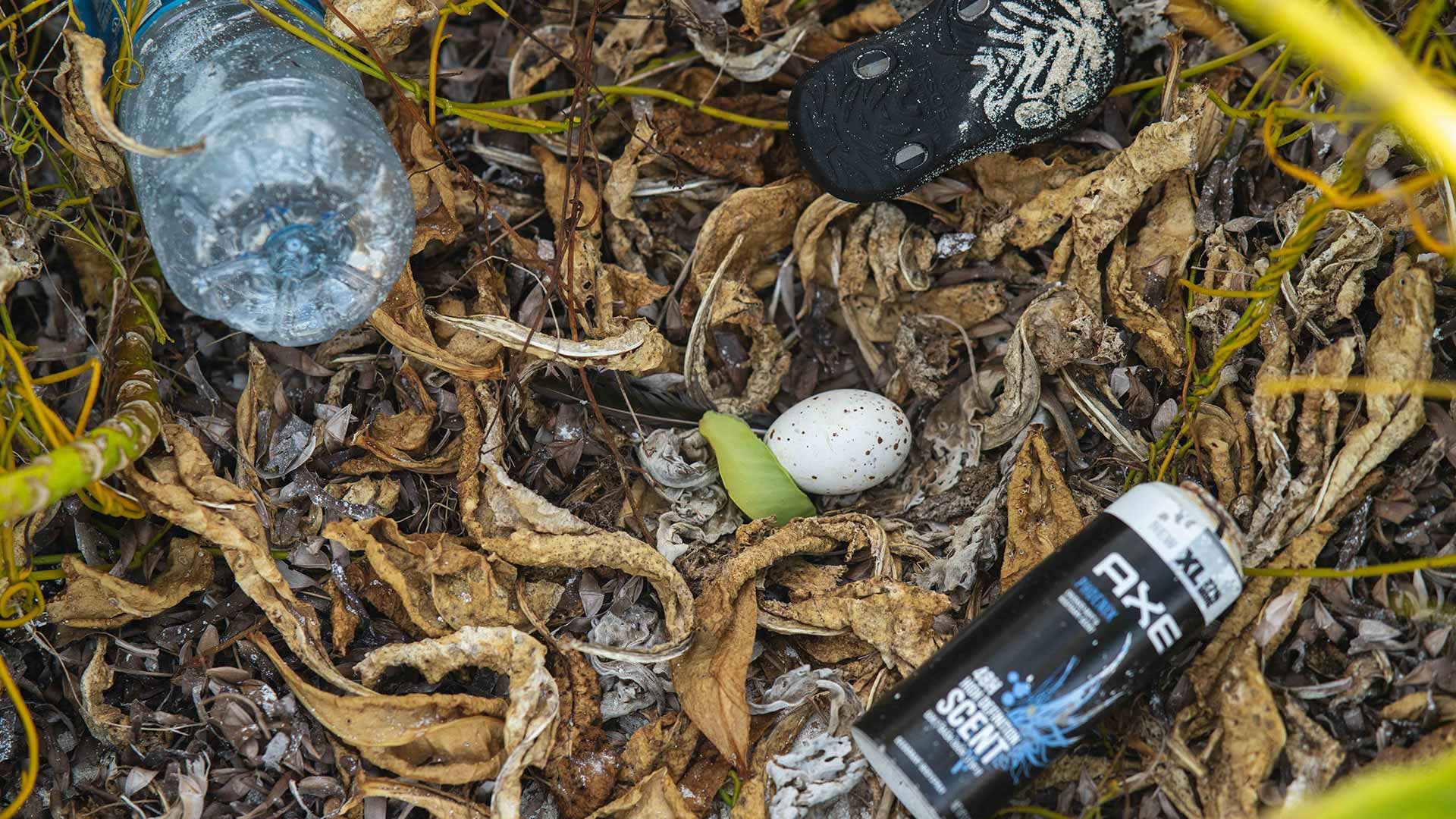
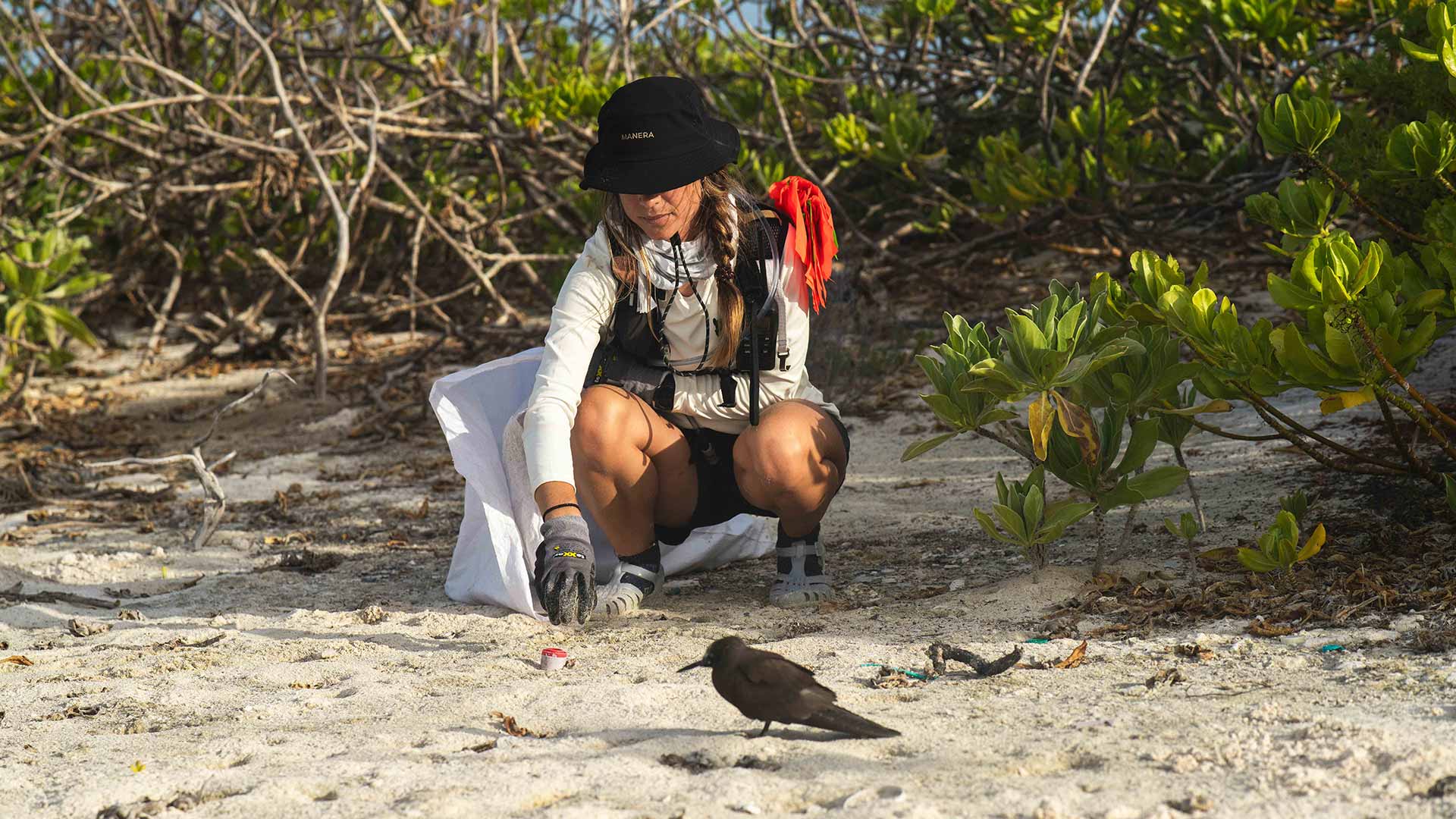
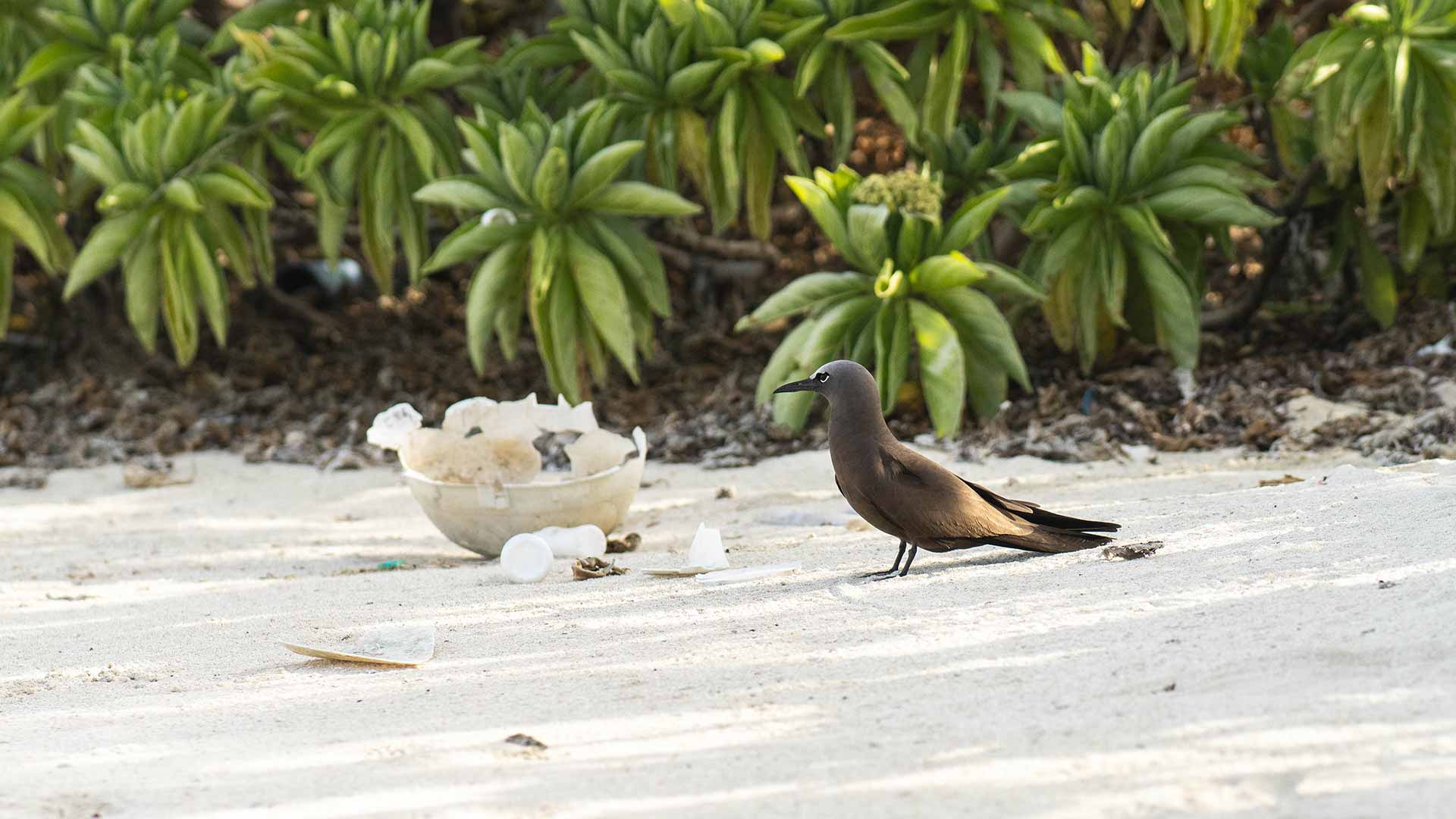
Even after collecting 5.3 tonnes, there is likely twice as much waste still stranded on the island. Impossible to remove everything this time. And leaving Coco in this state is not an option. A serious challenge for the years ahead.
This mission, however, delivered invaluable lessons:
- Better assess pollution upstream: thanks to drone surveys and image analysis methods initiated at Aldabra and tested here, we are making progress in estimating volumes and weights before arriving on site.
- Optimise base camps and team organisation: many ideas emerged around onshore efficiency, coordination, pacing and equipment.
- Design new tools: the field sparked a wealth of ideas for faster, stronger and more ergonomic systems. We are eager to prototype and test them in real conditions.
Saint Brandon made it clear: every clean-up is unique, with its surprises, its limits and its small victories. And sometimes, even when well prepared, a 5 km island gently reminds us of our limits.
Stopover in Rodrigues – November 2025
Rodrigues: a testing ground for a waste-free world
Building on these two missions in the Indian Ocean, we made a stopover in Rodrigues, the small cousin of Mauritius. A peaceful island where time seems to stand still, yet one that has already grasped the challenges of waste management. The goal of this stopover: to identify the location of our future micro-factory, developed in partnership with Mautopia. A project we have been working on for several months, recently strengthened by the support of the IUCN’s IslandPlas programme. A welcome boost.
Rodrigues already stands out as a regional example. For over ten years, RodClean has been developing separate collection points for cardboard, paper, aluminium and plastic. This level of organisation is still rare elsewhere in the Indian Ocean.
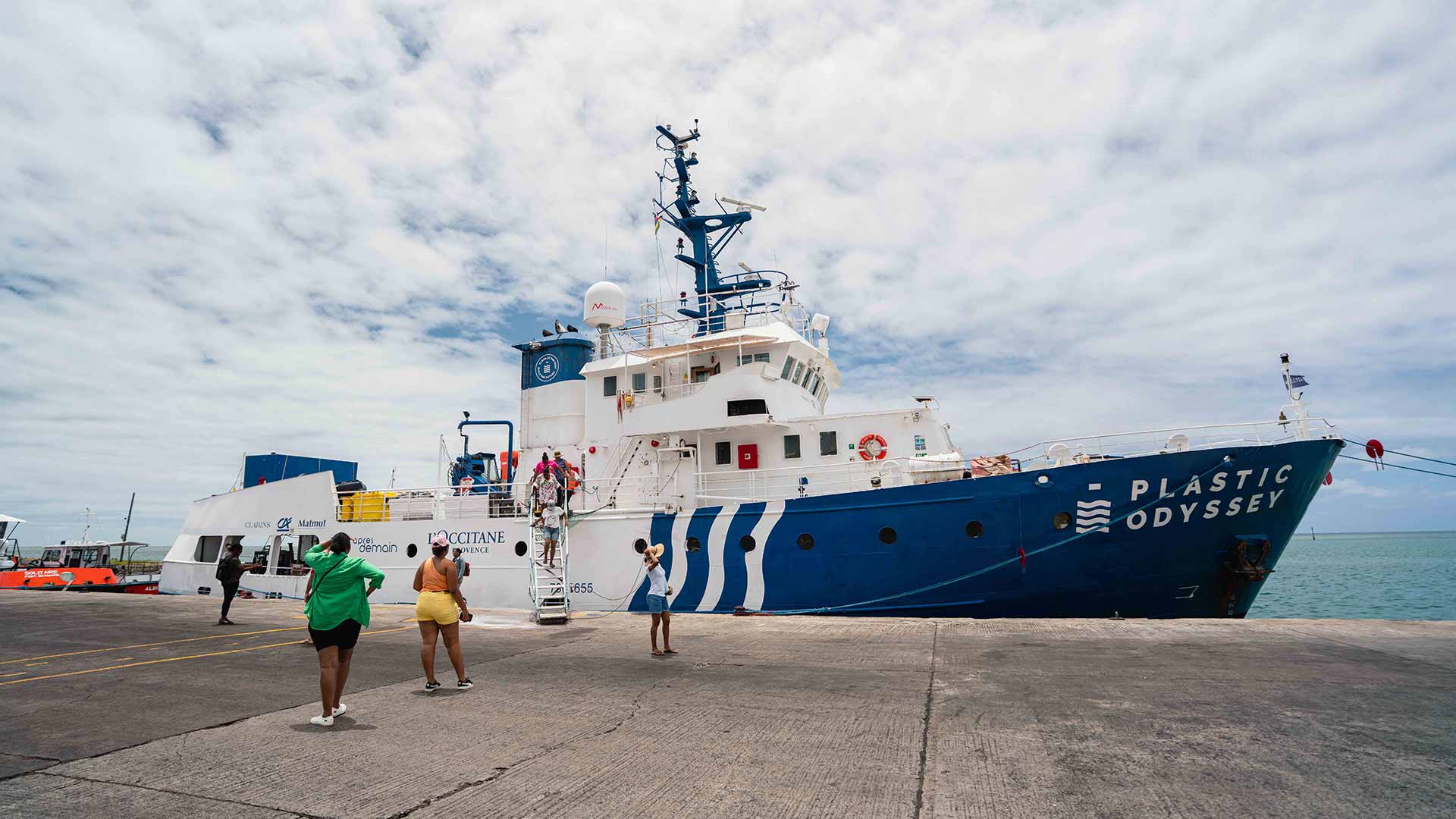
And in January 2026, the island will take things a step further: selective collection and mandatory sorting for all households. A small daily revolution that naturally requires local solutions to manage the resulting waste streams.
This is where the Mautopia x Plastic Odyssey duo comes into play. Together, we are preparing a pre-treatment container (compaction and shredding for PET and rigid plastics) scheduled to be operational in the first half of 2026. The principle is simple: reduce plastic volumes directly on the island, before shipping the material to Mauritius for industrial recycling with well-established partners.
In short, Rodrigues shows what a small island can achieve when it chooses to lead by example and gives itself the means to do so. A territory that experiments, innovates and helps move the entire region forward. And we are delighted to support this momentum.
What’s next
- Cape Town, South Africa: December 8–22, 2025
- Dakar, Senegal: January 26–February 16, 2026
- Mindelo and Santa Luzia, Cape Verde: February 19–March 11, 2026
- France tour: April–July 2026